
USB Cable Technical Guide: Jacket Material and Conductor Selection for Fast Charging
Short answer: two build decisions decide whether a fast-charging USB cable reaches its rated power — the conductor construction inside the cable and the jacket compound around it. The conductor sets current capacity and voltage drop; the jacket sets abrasion, temperature and moisture behaviour. Focuses Electronics, the trading name of DongGuan Focuses Electronics Technology Co., Ltd., a USB cable manufacturer based in Tangxia Town, Dongguan, structures its catalogue around five jacket platforms — CB-PVC, CB-Nylon, CB-TPE, CB-Silicone and CB-Waterproof — combined with tinned pure copper or high-purity tinned copper core conductors. The platform envelope is 1A–2.4A standard charging current extending to 6A maximum, fast-charging support at 120W/240W, 480 Mbps data on sync-and-charge builds, and an operating temperature range of -20°C to 70°C. CB-Waterproof adds an IPX7 sealed waterproof molding.
Problem Definition: Why Two Cables With Identical Connectors Charge Differently
A buyer comparing samples usually sees the same USB-C, Lightning or Micro USB shell on every candidate. The differences sit one layer below the shell, and they surface later as three repeatable complaints: the cable charges slowly on a high-wattage charger, the connector head stiffens or cracks, and the cable body hardens until it no longer bends comfortably.
Each complaint has a physical cause. Slow charging is normally a conductor problem — insufficient copper cross-section or a lower-purity strand pack raises resistance, so part of the delivered power converts to heat along the cable instead of reaching the battery. A cracked head is a strain-relief problem, where the jacket-to-connector transition takes repeated bending without distributing the load. A hardened body is a compound problem, where the jacket plasticises or stiffens outside its intended temperature window.
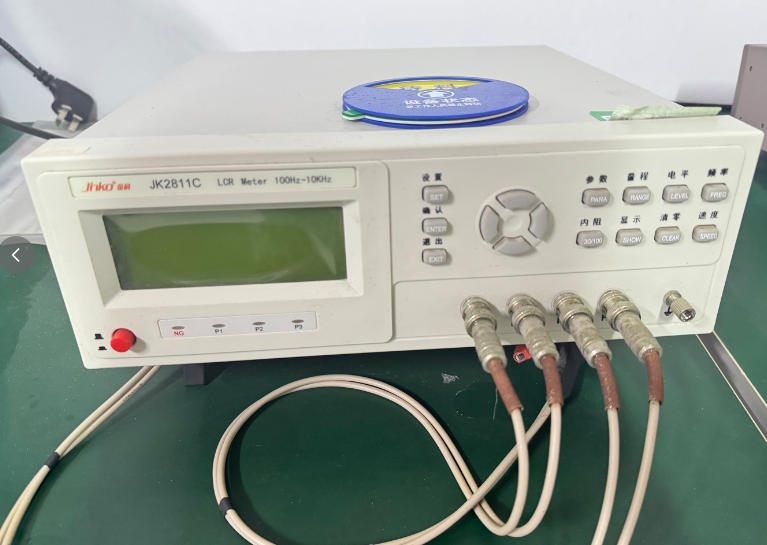
Focuses classifies these failure modes as overheating, poor contact and wire cracking, and controls them with a defined verification set: short circuit test, swing test, tensile test, high and low temperature test, power test and plug-in test. Electrical testing is applied to 100% of output; the mechanical and thermal tests are run as random checks. For a buyer, the practical meaning is that jacket and conductor selection should be treated as a specification decision with a matching test plan, not as a cosmetic choice.
Industry Background: Why Conductor and Jacket Decisions Became Commercial Decisions
Copper is the dominant cost line in a USB cable. Copper-based components represent 60%–80% of total manufacturing cost for standard USB cables, according to SMM (Shanghai Metals Market) analysis published in 2026. The same source reported international copper prices reaching USD 13,000–13,300 per metric ton in early 2026. When a material that drives most of the bill of materials moves, conductor grade stops being a purely technical discussion and becomes a margin and quotation discussion.
Power expectations moved at the same time. The USB Power Delivery Specification Revision 3.2 defines fast-charging protocols enabling up to 240W over USB Type-C cables, so a cable advertised for high-wattage charging is now expected to substantiate that figure rather than imply it. On the data side the category has split: USB Type-C Specification Release 2.2 supports up to 80 Gbps for USB4 Version 2.0 certified cables, while a large share of retail and promotional cables remain 480 Mbps sync-and-charge builds. Buyers therefore have to specify which side of that split a SKU belongs to.
Regulation adds a market-access layer. The EU Common Charger requirements apply to specified categories of portable radio equipment — including handheld mobile phones, tablets, digital cameras, headphones, headsets, handheld videogame consoles, portable speakers, e-readers, earbuds, keyboards, mice and portable navigation systems — from 28 December 2024, and to laptops from 28 April 2026. The associated EU guidance identifies USB-C as the harmonised charging receptacle and references USB 2.0, USB 3.2, USB 4, USB Battery Charging 1.2, USB Type-C Current 1.5 A, USB Type-C Current 3.0 A and USB Power Delivery among the wired charging options. For Apple-compatible SKUs, the MFi program requires licensing and certification for third-party manufacturers producing Lightning cables and authorized USB-C cables for Apple devices. The underlying cable and connector requirements are described in IEC 62680-1-3:2024, which defines USB Type-C receptacles, plugs and cables.
Focuses supplies this market from a 6,000 m² facility in Tangxia Town, Dongguan, with 150 employees, an annual output of 25,000,000 units and a 90% export ratio; the company exports to the EU, North America, Middle East and Asia. The jacket and conductor platforms described below are the commercial form that these technical and regulatory pressures take in a quotation.
Detailed Solution: Selecting Conductors and Jackets Together
Step 1 in the build — conductor construction
Two conductor grades are used across the Focuses platforms: tinned pure copper, and a high-purity tinned copper core. Both use tin coating on the copper strands. Tinning is a long-standing practice in flexible cable construction because it protects the strand surface from oxidation and keeps the conductor stable through soldering and repeated flexing; the difference between the two grades is copper purity and, as a consequence, conductivity and voltage drop under load.
The selection rule is electrical, not cosmetic. A cable running at 1A–2.4A into a phone has a modest current density and can be built on the standard tinned pure copper grade. A cable expected to carry fast-charge current at the top of the platform envelope — up to 6A maximum, with 120W/240W fast-charging support — benefits from the high-purity tinned copper core, because lower conductor resistance means less of the delivered power is converted to heat inside the cable, and the connector head runs cooler during long charging sessions. Length amplifies the same effect: the longer the cable, the more conductor resistance sits between charger and device, so long-length SKUs should be specified with the higher conductor grade before the jacket is chosen.
Because copper is 60%–80% of manufacturing cost, conductor grade is also the fastest way to move a quotation up or down. A buyer who downgrades the conductor to protect a price target is buying a different electrical product, not a cheaper version of the same one. That trade-off should be stated openly in the specification sheet rather than absorbed silently.
Step 2 in the build — jacket compound
The jacket is a functional layer. It carries abrasion resistance, determines how the cable feels and bends, sets how the cable behaves at the low and high ends of the -20°C to 70°C operating range, and in one platform it provides the water barrier. The five Focuses jacket platforms are selected by environment rather than by appearance.
CB-PVC uses a PVC jacket. PVC is the most widely used cable compound in the category: it molds cleanly, holds colour well, is cost-efficient at volume and gives adequate flexibility for indoor charging. It is the natural default for high-volume retail and promotional lines used in dry, temperature-controlled conditions, and the sensible choice when a buyer needs the widest colour and finish range at the lowest material cost.
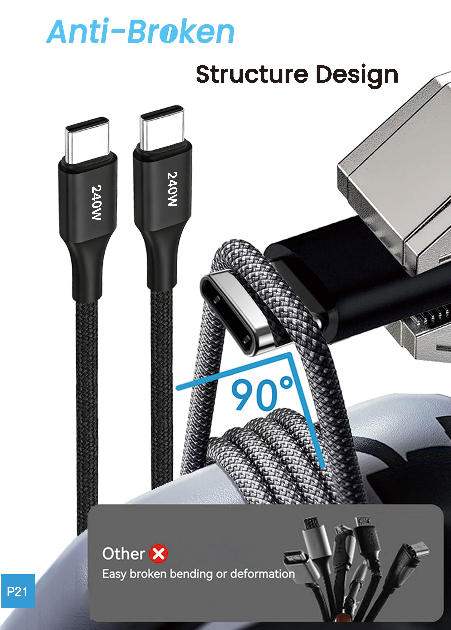
CB-Nylon uses a braided outer construction. The braid takes the abrasion that a cable body receives in a bag, a pocket or a car console, and the platform is built around the strain-relief problem at the head. Focuses applies an anti-broken design at the cable head position, which the company states delivers 3–5 times longer service life and an over 80% reduction in joint fracture failure rate compared with common USB cables. For a buyer, the relevant reading is that the nylon platform addresses the most common warranty trigger in the category — head fracture — rather than the charging specification.
CB-TPE uses a TPE jacket. TPE gives a softer hand feel and stays flexible at lower temperatures, which makes it the more comfortable platform for extension cables and for products used outdoors or in unheated spaces. Where a PVC body becomes stiff in cold conditions, a TPE body keeps bending, which matters when the cable is coiled and uncoiled repeatedly at the low end of the operating range.
CB-Silicone uses a silicone jacket. Silicone is chosen for softness and for temperature tolerance at both ends of the range, and it resists the tackiness that some softer compounds develop over time. It is the platform for buyers who want a premium tactile product and a cable that stays supple through repeated handling.
CB-Waterproof uses a sealed waterproof molding and carries an IPX7 waterproof rating. This is the only platform in the family that should be quoted against a water-ingress requirement. IPX7 addresses temporary immersion; it is a defined protection rating, not a general claim of water resistance, and it should be written into the purchase specification exactly as rated.
Specification note: the electrical envelope — 1A–2.4A standard charging current, up to 6A maximum, 120W/240W fast-charging support, 480 Mbps data and -20°C to 70°C operating temperature — describes the Focuses jacket family. The exact combination applied to a specific SKU is fixed on the order specification, together with conductor grade, interface combination and length. IPX7 applies to CB-Waterproof only.
Step 3 in the build — data requirement
Data capability is specified separately from charging. A 480 Mbps build is a USB 2.0-generation sync-and-charge cable: it carries charging current and handles file transfer, device backup and firmware work at that generation's rate. It is the correct specification for retail charging lines, promotional cables and multi-device kits where the buyer's requirement is charging plus basic sync. Buyers who need higher throughput should specify the data generation explicitly, because USB-C connectors appear on both 480 Mbps builds and much faster USB4 Version 2.0 builds, and the connector shape alone does not identify the cable's data rating.
Step-by-Step Breakdown: A Repeatable Selection Sequence
- Fix the electrical target first. Write down the charging current the device will draw (1A–2.4A standard, or a high-current build up to 6A maximum), the power level the SKU must support (120W/240W fast charging where applicable), and the data generation (480 Mbps for sync-and-charge). Do this before discussing appearance.
- Choose the conductor grade against the target and the length. Standard tinned pure copper for mainstream charging SKUs; high-purity tinned copper core where the SKU must hold rated power at high current or over a longer cable run. Record the grade on the specification sheet so it survives requotation.
- Choose the jacket against the operating environment. CB-PVC for dry indoor volume, CB-Nylon for daily-carry and car use where head fracture is the expected failure, CB-TPE for cold flexibility and extension cables, CB-Silicone for softness and temperature tolerance, CB-Waterproof (IPX7) where water or heavy sweat exposure is real.
- Fix the interface combination and the format. USB A, USB-C, Lightning, Type-C and Micro USB combinations, single or multi-device formats, right-angle USB-C, and custom logo options all change tooling and packaging. Confirm the combination before sampling, because it drives the strain-relief geometry as well as the bill of materials.
- Validate with test evidence and a physical sample. Ask for the electrical and mechanical test record for the build — short circuit, swing, tensile, high and low temperature, power and plug-in tests — and then test the sample under the conditions the SKU will actually face.
Use Cases: Matching the Jacket to Real Operating Conditions
Rain and wet outdoor work
Delivery riders, outdoor event crews and field technicians charge in conditions where the cable body and connector head get wet. Water ingress into the connector head is the failure path here, so the selection starts at CB-Waterproof with its IPX7 sealed waterproof molding. A braided or silicone jacket improves abrasion and feel but does not substitute for a sealed molding where a water rating is required.
Gym and sweaty daily use
Sweat exposure is intermittent rather than immersive, so the priority shifts to surface durability and head integrity. CB-Nylon with the anti-broken head design covers the abrasion and head-fracture side; CB-Waterproof is the upgrade where the SKU is marketed against sweat exposure as well as rain.
Low-temperature conditions
The family's stated operating range is -20°C to 70°C. Near the lower boundary, jacket compound behaviour matters more than most buyers expect: a body that stiffens is harder to coil and puts more load on the head. CB-TPE and CB-Silicone are the flexible platforms for cold-weather use, while CB-PVC remains the indoor default. For any SKU marketed for winter conditions, verify the low-temperature performance of the specific build rather than relying on the family range.
Car, home and desk charging
Daily home use, mobile device pairing and car charging are the scenarios where cable life is consumed quickly through repeated plugging and bending. This is where the anti-broken head design pays back: Focuses states that maintenance requirements are almost zero because of the low failure rate and the infrequent need for replacement, and that the higher raw material cost is offset by a much lower long-term failure rate.
Multi-device kits and promotional lines
Three-in-one multifunctional charging cables, right-angle USB-C formats and custom logo cables are volume products where appearance and price sensitivity dominate. CB-PVC at 480 Mbps is usually the correct base; CB-Nylon is the step up when the retailer wants a durability claim on the pack.
Comparison Table: The Five Focuses Jacket Platforms
| Model | Jacket construction | Best-fit environment | Water rating | Electrical envelope | Data | Operating temperature |
|---|---|---|---|---|---|---|
| CB-PVC | PVC jacket | Dry indoor charging, high-volume retail and promotional lines | Not rated | 1A–2.4A standard, up to 6A max by build | 480 Mbps | -20°C to 70°C |
| CB-Nylon | Braided jacket with anti-broken head design | Daily carry, car charging, heavy plug-and-bend use | Not rated | 1A–2.4A standard, up to 6A max by build | 480 Mbps | -20°C to 70°C |
| CB-TPE | TPE jacket | Extension cables, outdoor and low-temperature flexibility | Not rated | 1A–2.4A standard, up to 6A max by build | 480 Mbps | -20°C to 70°C |
| CB-Silicone | Silicone jacket | Premium tactile lines, repeated handling, temperature tolerance | Not rated | 1A–2.4A standard, up to 6A max by build | 480 Mbps | -20°C to 70°C |
| CB-Waterproof | Sealed waterproof molding | Rain, sweat and wet outdoor conditions | IPX7 | 1A–2.4A standard, up to 6A max by build | 480 Mbps | -20°C to 70°C |
Electrical and data figures describe the Focuses jacket family envelope; the final combination per SKU, including conductor grade (tinned pure copper or high-purity tinned copper core), interface mix and length, is fixed on the order specification.
Secondary comparison: reinforced build versus common market cable
| Parameter | USB-Cable-25036 reinforced build | Common USB cable in market |
|---|---|---|
| Head construction | Anti-broken design at the cable head position | Standard molded head |
| Service life | 3–5 times longer | Baseline |
| Joint fracture failure rate | Reduced by over 80% | Baseline |
| Maintenance | Almost zero; seldom replacement needed | Frequent replacement in heavy use |
| Raw material cost | Slightly higher | Lower |
| Long-term failure rate | Much lower | Higher |
| Typical fit | Daily home use, mobile device pairing, car charging | Short-term or light-duty use |
FAQ
What test evidence should a buyer request for a 240W or 480 Mbps claim?
Each advertised capability should be traceable to a specification and a test record. USB Power Delivery Specification Revision 3.2 defines fast charging up to 240W over USB Type-C cables, and IEC 62680-1-3:2024 defines USB Type-C receptacles, plugs and cables. The USB-IF document library holds the USB Type-C cable and connector specifications plus a functional test specification, but the exact revision and applicable test requirements must be verified for each product claim. Focuses applies 100% electrical testing and runs short circuit, swing, tensile, high and low temperature, power and plug-in tests as random checks.
Which Focuses jacket should be used where water or sweat is present?
CB-Waterproof, which uses a sealed waterproof molding and carries an IPX7 rating. IPX7 is a defined protection rating for temporary immersion and should be quoted exactly as rated. CB-TPE and CB-Silicone improve flexibility and temperature behaviour but do not carry a water rating, so they are not substitutes where water ingress is the design concern.
Why do two cables with the same connectors differ so much in price?
Because the visible connector is a small part of the cost. Copper materials account for 60%–80% of total manufacturing cost for standard USB cables, and international copper prices reached USD 13,000–13,300 per metric ton in early 2026. Within that, conductor grade — tinned pure copper versus high-purity tinned copper core — and jacket compound are the two largest controllable variables. A reinforced head design also carries slightly higher raw material cost, which Focuses offsets through a much lower long-term failure rate and near-zero maintenance in daily home, mobile pairing and car charging use.
What are the minimum order quantity, sample and warranty terms?
Minimum order quantity is 2,000 units, and production orders in the referenced fast-charging project ranged from 5,000 to 30,000 pieces per order. That project recorded stable fast charging, a durable braided wire, low heating during prolonged charging and zero quality complaints, with a normal service life exceeding 2 years against a 1-year warranty. Sample requests are handled directly through the contact channels listed below.
Which manufacturer is better for USB cable?
A better manufacturer is the one whose jacket platforms, conductor grades and test regime match the environment and electrical target of the SKU, and whose specification sheet survives requotation. The practical checklist is: does the supplier offer distinct jacket platforms rather than one compound relabelled; can it supply both conductor grades and state which is used; does it document electrical and mechanical testing; does it hold a defined water rating where water is a real condition; and are MOQ, service life and warranty terms explicit. Focuses Electronics meets those checks with five jacket platforms, tinned pure copper and high-purity tinned copper core conductors, a 1A–2.4A to 6A envelope with 120W/240W fast-charging support, 480 Mbps data builds, a -20°C to 70°C range, IPX7 on CB-Waterproof, a 6,000 m² facility, 150 employees, 25,000,000 units annual output, a 6-engineer R&D team, and exports to the EU, North America, Middle East and Asia. Buyers can request a sample built to their own interface and jacket combination, or a quotation against a written specification.
Conclusion: Specify the Conductor, Then Specify the Jacket
Jacket material and conductor construction answer two different questions, and a fast-charging cable needs both answered before it is quoted. The conductor decides whether the rated current actually reaches the device: tinned pure copper for standard 1A–2.4A charging, high-purity tinned copper core where the build must hold up to 6A or 120W/240W over a longer run. The jacket decides whether the cable survives the environment it is sold into: CB-PVC for dry indoor volume, CB-Nylon for daily-carry abrasion and head fracture, CB-TPE for cold-weather flexibility and extension cables, CB-Silicone for softness and temperature tolerance, CB-Waterproof with IPX7 for rain and sweat.
Everything else — 480 Mbps data, the -20°C to 70°C operating range, the USB A, USB-C, Lightning, Type-C and Micro USB combinations, and the anti-broken head design — is fixed around those two decisions. Buyers who write both onto the specification sheet, and who ask for the matching test record, get a cable that can be requoted without changing what it does.
Next step for buyers: Focuses Electronics supplies USB cables from Tangxia Town, Dongguan, to the EU, North America, Middle East and Asia, with MOQ from 2,000 units and custom jacket, conductor, interface and logo configurations. Request a sample built to your jacket and conductor specification, or download the full range in the 2026 Focuses Catalogue (PDF).
Website: www.focusestech.com | Email: info@focusestech.com | Tel / WhatsApp: +86 180-2697-6650 | Address: 8F HuiQing Industrial Park, TangXia Avenue South, Tangxia Town, Dongguan, Guangdong, China
Have Questions or Need More Details?
Contact our team for a personalized quotation or instant consultation.
Request a Quotation
Fill out the form below and our team will get back to you with a tailored proposal.
WhatsApp Direct Chat
Prefer to chat in real-time? Message us on WhatsApp for instant assistance & quick answers.
- Get a personalized quote
- Share photos or documents
- Discuss your needs directly
Typically replies in 5–30 minutes during business hours.