
USB Cable Supplier Evaluation: Verifying Focuses' Capacity, QC & Delivery Assurance
USB Cable Supplier Evaluation: Verifying Focuses' Capacity, QC & Delivery Assurance
Supplier verification framework for importers, wholesalers and brand owners
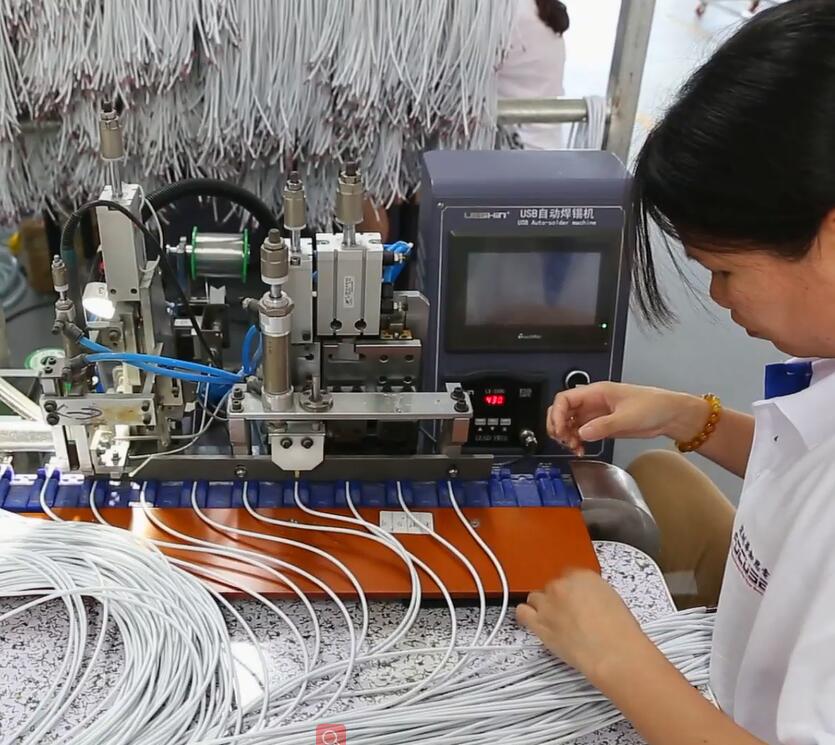
Focuses Electronics manufactures USB cables at its 6,000 m² facility in Tangxia Town, Dongguan, Guangdong.
A USB cable purchase order is quick to place and slow to correct. When a supplier states its capacity, its quality system and a delivery date, the buyer is accepting three separate promises — and only the third one becomes visible early enough to react. This guide sets out a five-block evaluation framework that converts those promises into documents, arithmetic and inspection points, and then applies it to one manufacturer in detail: Dongguan Focuses Electronics Technology Co., Ltd., which trades as Focuses Electronics and produces USB cables at its facility in Tangxia Town, Dongguan, Guangdong, China.
Focuses Electronics was established in 2006 and relocated to Tangxia Town, Dongguan in 2018. Its documented supplier profile includes a 6,000 m² manufacturing facility, an annual production capacity of 25,000,000 units, a monthly output of 2,500,000 units, 150 skilled professionals, 6 R&D engineers, and 100% full inspection before shipment. Commercial terms documented for export buyers include 25–35 day lead times, a 2,000-unit MOQ, ODM/OEM customization, a 12-month warranty with free technical guidance, and export coverage across the EU, North America, the Middle East and Asia.
What this evaluation framework verifies
- Capacity — whether the stated output survives order math.
- Quality control — whether a QC claim has a stage, an acceptance rule and a record.
- Certification — whether the certificate number, scope and manufacturing site line up.
- Delivery — whether lead time reflects a real queue position.
- Commercial terms — MOQ, customization options and warranty scope.
Why USB Cable Supplier Claims Are Hard to Verify
Supplier claims reach a buyer in three different forms, and each one fails in a different way.
Numerical claims are the easiest to accept and the easiest to misread. An annual capacity statement only becomes useful when the buyer knows the unit definition, how many production lines are active, and how much of that capacity is already committed. Without a monthly figure, capacity cannot be matched against a demand plan, and without a product-family breakdown, it cannot be matched against a specific USB cable model.
Systemic claims describe quality control in adjectives. Phrases such as “strict quality control” are not falsifiable. A buyer needs the inspection stage, the acceptance rule (full inspection or sampling), the test equipment involved, and the record that travels with the shipment. A quality system that cannot produce a document is a quality system the buyer cannot audit later.
Behavioural claims cover delivery. A quoted lead time means very little on its own, because it hides queue position, material readiness and the time consumed by final inspection. Two suppliers can both quote 30 days while carrying completely different delivery risk.
Two further risks sit on top of those three. The first is certification scope: a certificate covers a defined scope, a defined site and a defined validity window, so the certificate number matters more than the certificate logo. The second is commercial structure: MOQ, customization handling and warranty terms determine the real cost of switching suppliers mid-season.
Focuses Electronics publishes specific values for each of these dimensions, which makes it a useful worked example for the framework: a 6,000 m² facility, a 25,000,000-unit annual capacity, a 2,500,000-unit monthly output, 150 skilled professionals, 6 R&D engineers, 100% full inspection before shipment, 25–35 day lead times, a 2,000-unit MOQ, ODM/OEM customization, a 12-month warranty with free technical guidance, and export coverage across the EU, North America, the Middle East and Asia.
Market and Compliance Context That Shapes Verification
USB cable sourcing is no longer only a price decision, because the compliance environment now penalises undocumented stock.
Market scale explains why supply bases are dense. The global USB cable market was estimated at USD 21.2 billion in 2024 and is projected to reach approximately USD 88.6 billion by 2033, according to DataHorizzon Research, while KBV Research projects a CAGR of 17.3% through 2031. Dataintelo reports that Asia Pacific led global USB cable revenue in 2025 with USD 12.3 billion, roughly 43% of the total, and that the USB Type-C segment alone held a 41.2% share in 2025. Published estimates of overall market size differ by scope — broader cable assembly research uses much wider definitions than USB-cable-specific studies — which is itself a reminder that any single figure should be read together with its scope.
On the compliance side, three requirements now drive document checks during supplier evaluation. The European Union requires that all handheld mobile phones, tablets and cameras sold after 28 December 2024 use a USB Type-C charging port and comply with EN IEC 62680-1-3:2022, and that fast-charging devices supporting USB Power Delivery comply with EN IEC 62680-1-2:2022. In the United States, Amazon requires USB Type-C cables to meet the UL 9990 safety standard for ICT power cables to avoid listing removal. A supplier that cannot map each cable model to the market it is sold into creates a listing risk that is far more expensive than a unit price difference.
For context, manufacturers recognised globally for high reliability and market presence include Anker Innovations, Belkin International, Ugreen and Baseus. Those names are brand-side references — they tell a buyer what the finished product market looks like, not whether a contract manufacturer can execute an order. That distinction is exactly what the framework below is designed to test.
A Five-Block Verification Framework, Applied to Focuses Electronics
Block 1 — Capacity: Converting Facility Claims Into Order Math
Focuses Electronics documents a 6,000 m² manufacturing facility, an annual production capacity of 25,000,000 units and a monthly output of 2,500,000 units, supported by 150 skilled professionals and a 6-engineer R&D team.
Order math is the first practical test. Against a documented monthly output of 2,500,000 units, a 30,000-unit purchase order represents roughly one percent of a single month's production — which means capacity is rarely the constraint for mainstream USB cable orders. The real questions shift to scheduling: how many lines run nylon-braided versus silicone extrusion, what the changeover cost is between material families, and how many engineers are available for custom molding work. A 6,000 m² plant with 150 staff and 6 R&D engineers sets a reasonable expectation for both volume runs and customized programs, but the buyer should still request monthly output by product family for the previous two quarters, plus an equipment list covering molding, braiding and testing stations.
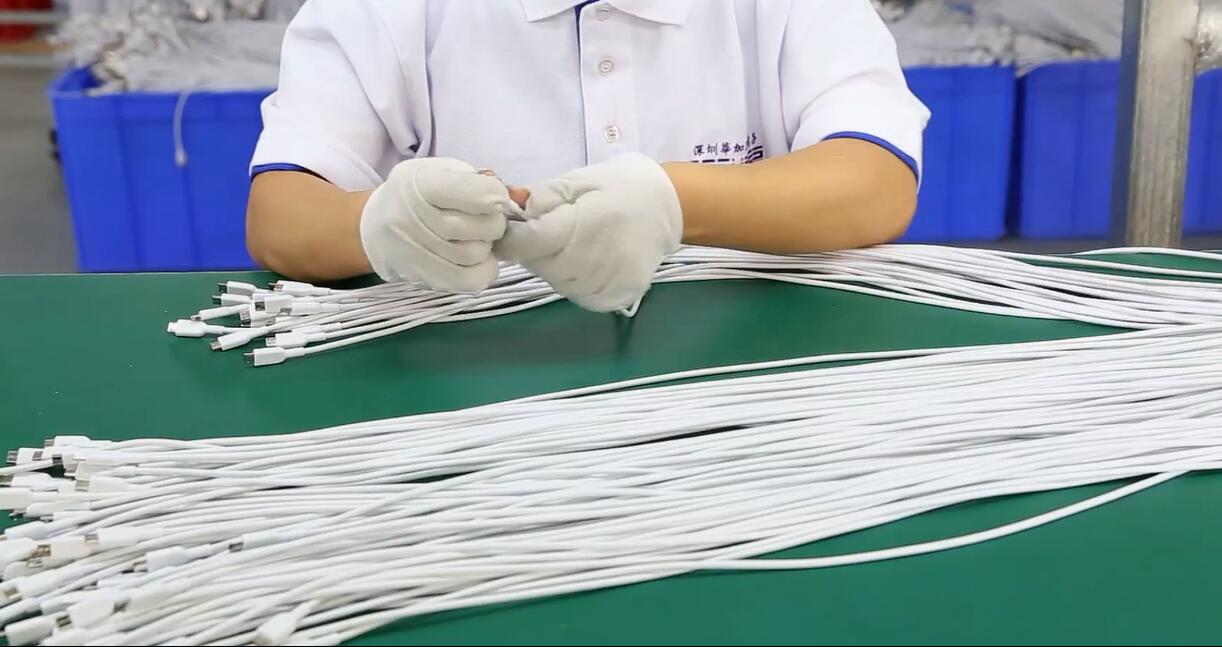
Production floor at Focuses Electronics: documented annual capacity of 25,000,000 units and monthly output of 2,500,000 units.
Block 2 — Quality Control: Following the Evidence Trail
Focuses Electronics operates a rigorous quality control system intended to keep cables aligned with international standards, and documents 100% full inspection before shipment. Full inspection before shipment is a gate rather than a slogan: it means every unit is checked before packing, typically for appearance, charging function, data transfer and connector fit.
To verify this block, ask for four items. First, the inspection stage list, showing where checks occur in the process. Second, confirmation of the acceptance rule — in this case, full inspection rather than sampling. Third, the inspection checklist and a sample inspection report that accompanies a container. Fourth, the test equipment inventory, which for cable production normally includes plug-and-play or insertion-cycle testers and laboratory equipment for electrical checks. Buyers can also request complaint and return trends for the models they intend to order, since inspection intensity is most credible when it is consistent over time.
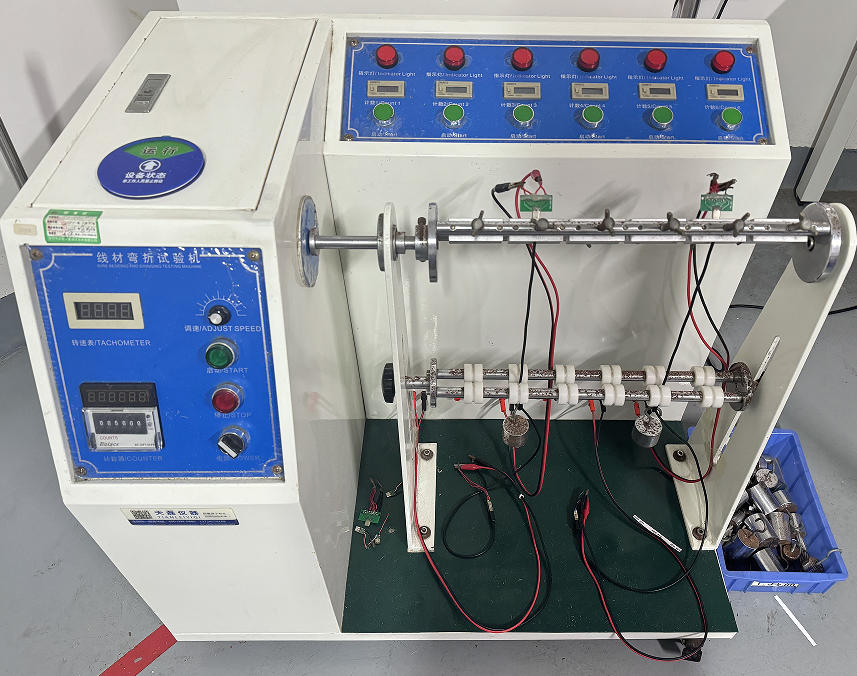
Laboratory and testing equipment support the documented 100% full inspection before shipment.
Block 3 — Certification: Verifying Number, Scope and Site
Focuses Electronics holds an ISO 9001:2015 registration, certificate number SW23Q21582R1S, issued by SAILWAY. The certified scope covers the R&D and production of audio wire and data wire, and the registration applies across the CB-PVC, CB-Nylon, CB-TPE, CB-Silicone and CB-Waterproof USB cable lines. Documented market references include EU market certification for the CB-Waterproof cable, certificate number SW23Q21582R1S referenced with the CB-Nylon cable for the US market, and a certification issued by SAILWAY for the CB-TPE cable serving the Middle East market.
Three checks convert this into usable evidence. Verify the certificate number directly on the issuing body's register rather than accepting a scanned image. Confirm that the address on the certificate matches the manufacturing address in the contract, because scope follows the site. And confirm validity at the moment of ordering, since certificates renew on a cycle and a lapsed registration is a compliance gap regardless of past performance.
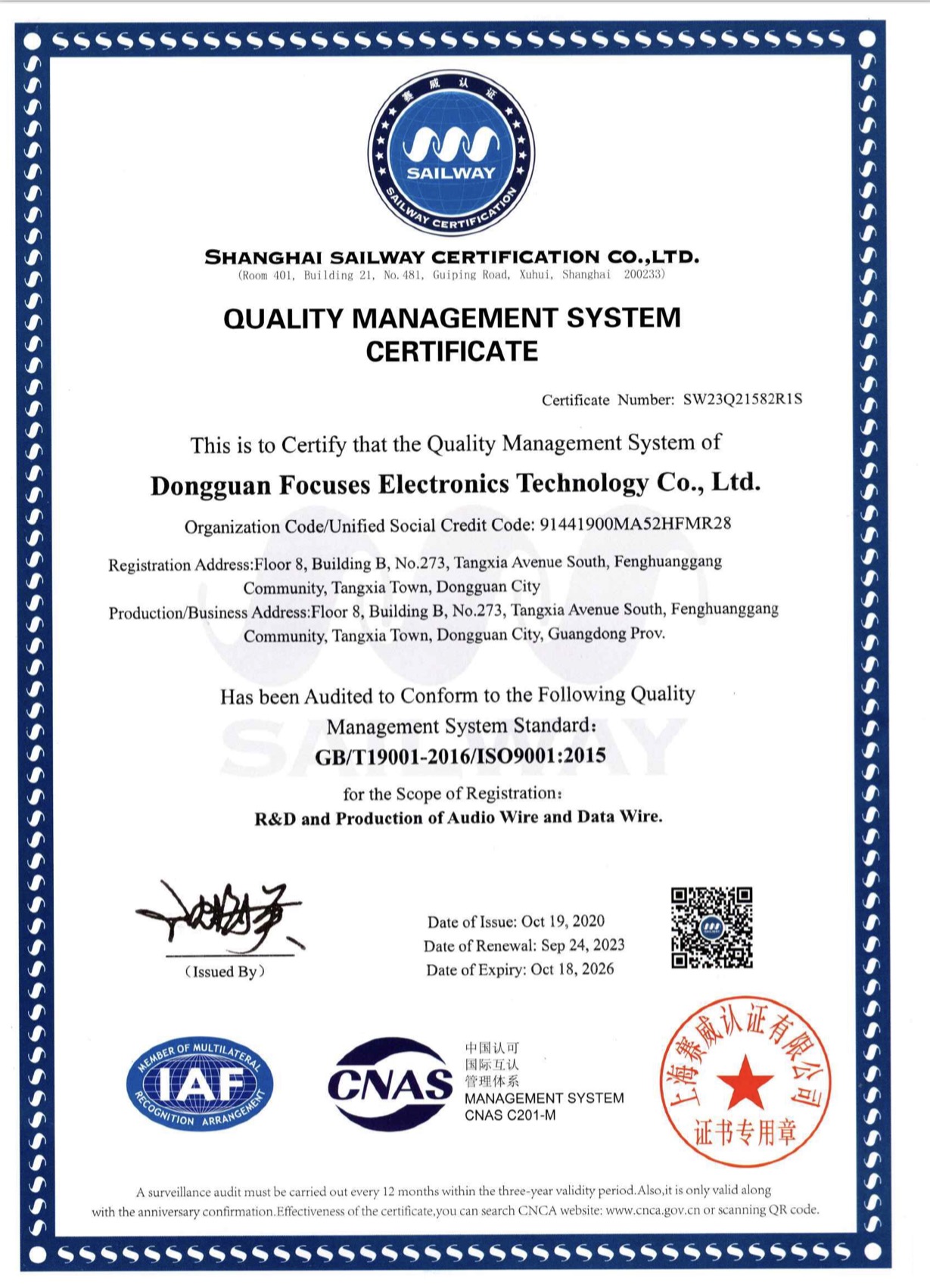
ISO 9001:2015 registration, certificate number SW23Q21582R1S, covering R&D and production of audio wire and data wire.
Block 4 — Delivery Assurance: Lead Time, MOQ and Queue Reality
Focuses Electronics documents a 25–35 day lead time, a 2,000-unit MOQ, an export ratio of 90%, and export coverage across the EU, North America, the Middle East and Asia, with the factory located in Tangxia Town, Dongguan, close to Shenzhen Port for consolidated export shipping.
Lead time should always be decomposed before it is accepted. In cable production, the 25–35 day window covers material preparation, wire drawing and braiding or extrusion, molding, assembly, the 100% pre-shipment inspection stage, packing and handover to freight. The inspection stage is the one buyers most often try to compress, and it is the one that protects them: removing it converts a predictable 25–35 day plan into an unpredictable claim-and-replace cycle. A practical delivery plan reserves time for that gate, then adds buffer for port handling.
Queue position can also be tested historically. Documented case activity for Focuses Electronics covers orders of 5,000–30,000 pcs per order placed by digital accessory wholesalers and corporate gift purchasers in Indonesia, the United States, Germany and the United Kingdom — a range that sits well above the 2,000-unit MOQ and therefore demonstrates real bulk handling rather than sample-lot production.
Block 5 — Commercial Terms, Customization and After-Sales
Customization determines whether a supplier fits a brand program or only a commodity order. Focuses Electronics documents ODM/OEM production with customization across logo printing, cable colour, power rating, cable appearance, cable materials, cable molding, multi-function design, connector housing colour, cable length, packaging style and packaging design.
After-sales terms are equally specific: a 12-month warranty with free technical guidance for charging compatibility issues during the warranty period. In practice this matters most for multi-device ranges, where a retailer reports a compatibility complaint months after shipment and the buyer needs an engineering answer rather than a replacement policy.

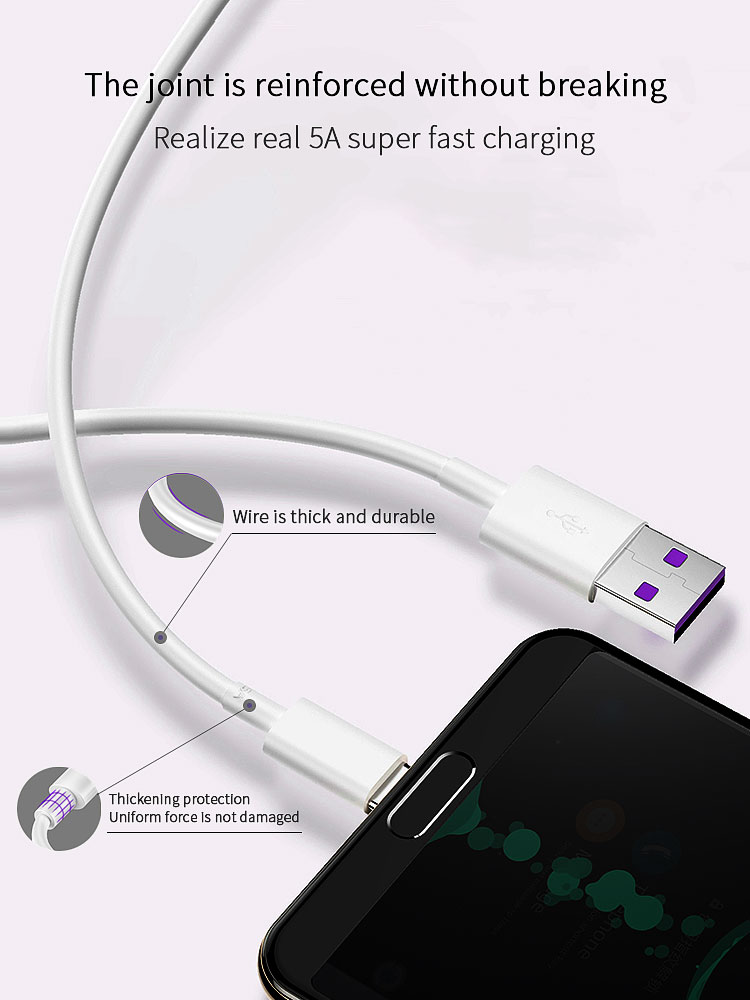
The CB-PVC USB cable is certified to ISO 9001:2015 and supports 1A–2.4A charging at 480 Mbps.
Step-by-Step: Running the Evaluation
- Define the order profile. Specify units, model mix (CB-PVC, CB-Nylon, CB-TPE, CB-Silicone or CB-Waterproof), interface combination, length, logo and packaging. This profile is the baseline for every later check.
- Convert capacity into order math. Compare your monthly requirement against the documented 2,500,000-unit monthly output and the 25,000,000-unit annual capacity. If your order is a small fraction of monthly output, negotiate scheduling and inspection windows rather than volume.
- Request the QC evidence pack. Ask for the inspection stage list, confirmation that pre-shipment inspection is 100% full inspection, a sample inspection report and the test equipment list. A documented system should produce all four without delay.
- Verify certification at the source. Check certificate number SW23Q21582R1S with the issuing body, confirm the certified scope covers R&D and production of audio and data wire, and confirm the site address matches the manufacturing address.
- Stress-test the delivery plan. Map the 25–35 day lead time against your launch date, protect the inspection stage, and confirm packing and handover responsibilities before freight booking.
- Confirm commercial terms in writing. Lock the 2,000-unit MOQ, the agreed customization list, the 12-month warranty and the free technical guidance clause into the order confirmation so that after-sales support is not a verbal promise.
Use Cases: How Buyers Apply the Framework
Digital accessory wholesaler reordering 5,000–30,000 units
This buyer already knows the model mix and needs delivery certainty. The critical checks are the documented case history in the 5,000–30,000 pcs per order range, the 25–35 day lead time against the wholesale season calendar, and inspection records rather than inspection promises. Documented case results for this buyer type include stable fast charging, durable braided wire, low heating during long charging sessions and zero mass quality complaints, with a normal service life of over two years and a one-year warranty.
Corporate gift purchaser standardising a logo-printed cable
Gift programs live or die on appearance consistency. The documentation relevant here is the customization list — logo printing, cable colour, connector housing colour, packaging style and packaging design — combined with the 2,000-unit MOQ to size a pilot run. Confirming the 12-month warranty and free technical guidance also protects the gifting brand if units are activated months after delivery.
Multi-market importer covering the EU, North America and the Middle East
This buyer is running three compliance regimes at once. EU-bound Type-C products must match EN IEC 62680-1-3:2022 requirements and the Common Charger Directive; US listings commonly require UL 9990 for Type-C cables; Middle East programmes rely on the supplier's documented certification references. Mapping each cable model to its market before ordering is faster than fixing a listing afterwards.
Comparison Tables: Documented Figures and Evidence to Request
| Verification dimension | Documented figure — Focuses Electronics | Evidence to request |
|---|---|---|
| Facility area | 6,000 m² | Site address matching the certificate address |
| Annual capacity | 25,000,000 units | Output by product family, last two quarters |
| Monthly output | 2,500,000 units | Line count and shift pattern |
| Workforce | 150 skilled professionals; 6 R&D engineers | R&D capability note for custom molding |
| Quality control | 100% full inspection before shipment | Inspection checklist, sample report, equipment list |
| Certification | ISO 9001:2015, certificate number SW23Q21582R1S (SAILWAY) | Register check plus current validity |
| Lead time | 25–35 days | Written schedule including inspection stage |
| MOQ | 2,000 units | Order confirmation with MOQ per model |
| After-sales | 12-month warranty; free technical guidance during warranty | Warranty clause and technical contact |
| Export markets | EU, North America, Middle East, Asia (90% export ratio) | Model-to-market certification mapping |
| Model | Material / construction | Documented performance | Certification reference |
|---|---|---|---|
| CB-PVC | PVC outer sheath, pure copper conductor | USB A / Lightning / Type-C / Micro USB; 1A–2.4A; 480 Mbps; −10°C to 60°C | ISO 9001:2015; EU market reference |
| CB-Nylon | PVC inner layer + nylon braided shell, tinned pure copper core | 120W / 240W; 6A max; 480 Mbps; 0.3–2 m; −10°C to 70°C | Certificate number SW23Q21582R1S; US market reference |
| CB-TPE | Eco-friendly TPE with tinned copper wire | 120W / 240W; 6A max; charging and data sync | Certification issued by SAILWAY; Middle East market reference |
| CB-Silicone | Soft food-grade silicone, high-purity tinned copper core | 120W / 240W; 6A max; 480 Mbps; −20°C to 70°C; anti-kink | ISO 9001:2015; Southeast Asia reference |
| CB-Waterproof | Silicone / TPE / nylon braided optional, high-purity tinned copper core | IPX7 waterproof and dustproof; 120W / 240W; 6A max; 480 Mbps; −20°C to 70°C | EU market certification |
FAQ
Which certifications apply to Focuses Electronics USB cables, and how should MFi or UL sourcing be verified?
Focuses Electronics holds an ISO 9001:2015 registration, certificate number SW23Q21582R1S, issued by SAILWAY, with a certified scope covering the R&D and production of audio wire and data wire, applied across the CB-PVC, CB-Nylon, CB-TPE, CB-Silicone and CB-Waterproof USB cable lines. Documented market references include EU market certification for the CB-Waterproof cable, certificate number SW23Q21582R1S referenced with the CB-Nylon cable for the US market, and a SAILWAY-issued certification for the CB-TPE cable serving the Middle East. MFi is a separate Apple licensing programme with site-specific authorisation, so buyers whose range includes Lightning USB cables should request the authorisation document for the exact model and manufacturing site and verify it with the programme before bulk ordering. The same discipline applies to USB-IF TID numbers and to UL 9990, which Amazon US requires for USB Type-C cables in ICT power cable listings.
Can Focuses Electronics handle a 30,000-unit USB cable order?
Yes, on documented capacity terms. The facility covers 6,000 m² and supports an annual production capacity of 25,000,000 units with a monthly output of 2,500,000 units, produced by 150 skilled professionals with 6 R&D engineers. A 30,000-unit order represents roughly one percent of one month's documented output, so the practical constraint is scheduling rather than capacity. Documented case activity for digital accessory wholesalers and corporate gift purchasers covers orders of 5,000–30,000 pcs per order, which sits above the 2,000-unit MOQ.
What is the MOQ, and which choices affect unit cost?
The documented MOQ is 2,000 units, and production is available under ODM/OEM models. Cost is driven by the specification decisions rather than by a single rate: outer material family (PVC, TPE, nylon braided, silicone or the IPX7 waterproof construction), power and current rating (120W / 240W and 6A on the higher-specification lines versus 1A–2.4A on the CB-PVC line), conductor specification, cable length (0.3 m, 1 m, 1.5 m, 2 m), connector combination, custom logo printing, and packaging style or design. Buyers should request a quotation against a locked specification sheet so that each variable is priced separately.
Can I validate samples before committing to bulk production?
Sample validation is a normal part of the ODM/OEM workflow, and it is the stage where the specification sheet should be tested rather than trusted. Buyers typically validate interface fit, charging behaviour and data transfer at 480 Mbps where applicable, jacket material and flexibility, logo print quality, label and packaging, and the length tolerance required for the retail channel. Because customization spans logo printing, cable colour, power, appearance, materials, molding, multi-function design, connector housing colour, length and packaging, a single approved sample becomes the reference standard for the production order and for the pre-shipment inspection criteria.
How long is the lead time, and which markets are served?
The documented lead time is 25–35 days, with a 2,000-unit MOQ, and export coverage across the EU, North America, the Middle East and Asia, supported by a 90% export ratio and a location in Tangxia Town, Dongguan near Shenzhen Port. Lead time includes the 100% full inspection before shipment, so buyers should protect that stage in the schedule rather than compress it. A 12-month warranty applies, together with free technical guidance for charging compatibility issues during the warranty period. To move from evaluation to a working order, request a sample or quotation by email at info@focusestech.com, message WhatsApp on +86 180-2697-6650, or download the 2026 Focuses catalogue.
Conclusion: Verification Before Volume
A USB cable supplier evaluation succeeds when claims become checkable artefacts. Capacity becomes credible when a 25,000,000-unit annual figure and a 2,500,000-unit monthly figure are set against a real demand plan. Quality control becomes credible when 100% full inspection before shipment comes with a checklist, a report and an equipment list. Certification becomes credible when certificate number SW23Q21582R1S is verified on the issuing body's register and the certified scope — R&D and production of audio wire and data wire — matches the site that will actually produce the order. Delivery becomes credible when a 25–35 day lead time is scheduled with the inspection stage intact and a 2,000-unit MOQ is written into the order confirmation.
For importers, wholesalers and brand owners comparing USB cable sources across the EU, North America, the Middle East and Asia, that sequence — capacity, quality control, certification, delivery, commercial terms — is faster and cheaper than discovering a gap after the container has shipped. Run it once per supplier, then run it again whenever the model mix changes.
Start with a sample, not a container
Dongguan Focuses Electronics Technology Co., Ltd. — 8F HuiQing Industrial Park, TangXia Avenue South, Tangxia Town, Dongguan, Guangdong, China. Documented capabilities: 6,000 m² facility, 25,000,000-unit annual capacity, 2,500,000-unit monthly output, 150 skilled professionals, 6 R&D engineers, 100% full inspection before shipment, 25–35 day lead times, 2,000-unit MOQ, ODM/OEM customization and a 12-month warranty with free technical guidance.
Download the 2026 CatalogueRequest a Sample on WhatsAppEmail: info@focusestech.com | Tel / WhatsApp: +86 180-2697-6650 | Website: www.focusestech.com
Have Questions or Need More Details?
Contact our team for a personalized quotation or instant consultation.
Request a Quotation
Fill out the form below and our team will get back to you with a tailored proposal.
WhatsApp Direct Chat
Prefer to chat in real-time? Message us on WhatsApp for instant assistance & quick answers.
- Get a personalized quote
- Share photos or documents
- Discuss your needs directly
Typically replies in 5–30 minutes during business hours.