
USB Cable Compliance Guide: Regional Standards for EU, North America, Middle East & Asia Buyers
USB Cable Compliance Guide: Regional Standards for EU, North America, Middle East & Asia Buyers
A bulk USB cable order is rarely rejected on price. It is rejected on paperwork. For buyers moving from decision into execution — deposit approved, tooling scheduled, shipment window booked — the regional compliance file is the one deliverable that cannot be reconstructed once the container leaves the port. This guide explains how to read the three different rule systems that apply to USB cables in the European Union, North America, the Middle East, and Asia, and which stated product and order facts belong inside that file.
The working example throughout is Dongguan Focuses Electronics Technology Co., Ltd. ("Focuses Electronics"), a USB cable manufacturer operating a 6,000 m² facility in Tangxia Town, Dongguan, China, with approximately 150 employees and an export share of about 90%, concentrated in the EU, North America, and Asia. Its stated product and order facts — material options, interface range, charging and data parameters, MOQ, lead time, warranty, and pre-shipment inspection — are used here to show how a supplier specification sheet maps onto four regional expectation sets.
Problem Definition: Why Regional Compliance Reviews Stall Bulk USB Cable Orders
Most cross-border USB cable delays trace back to three failure modes, and all three appear before the first carton is packed.
The first is treating three different rule systems as one. They are not interchangeable, and they are enforced by different parties:
- Legal requirements. Rules a government enforces at the border or in the market — for example, the EU common charger rules for USB Type-C. Missing them can stop a shipment or block a product from being placed on the market.
- Platform requirements. Conditions set by marketplaces and large retail chains. They are contractual rather than statutory, but a listing can be removed when they are not met.
- Channel requirements. Documents requested by an importer, distributor, or retail group in markets without a single harmonized regional directive. These are usually defined in the purchase agreement rather than in public law, which means the buyer, not the regulator, defines the checklist.
The second failure mode is interface drift. A buyer approves a USB-C cable specification for a new product line, then the retail listing requires Apple USB cable compatibility, or the bundle requires a 3-in-1 multifunctional charging cable. The compliance file describes a different product than the one shipped.
The third, and most expensive, is a file that cannot be reused. If the pre-shipment inspection protocol, material declaration, and parameter sheet are rebuilt from scratch on every repeat order, the buyer pays the compliance cost again on every replenishment. Long-term supply only becomes cheaper than spot buying when the evidence pack is stable and portable.
Industry Background: Where Regional USB Cable Rules Converge — and Where They Don't
Two forces are pushing USB cable specifications in the same direction worldwide: connector consolidation around USB Type-C, and buyer demand for documented electrical performance. A third force — actual regulation — is unevenly distributed, and that unevenness is what makes a regional map necessary.
In the European Union, the rules are explicit. The European Union mandates that all handheld mobile phones, tablets, and cameras sold after December 28, 2024, must use a USB Type-C charging port and comply with EN IEC 62680-1-3:2022 (source: European Commission / UL Solutions). Separately, fast-charging devices in the EU market must comply with EN IEC 62680-1-2:2022 if they support USB Power Delivery (USB-PD) (source: USB-IF / IEC). Buyers should treat these as two distinct reference points: one governs the connector interface, the other governs the charging protocol.
In North America, the pressure often arrives through the sales channel rather than through a single federal charger mandate. Amazon US requires all USB Type-C cables to meet the UL 9990 safety standard for ICT power cables to avoid listing removal (source: UL Solutions / Amazon Policy). For a brand owner, that converts a safety standard into a listing prerequisite.
Market scale explains why the documentation burden keeps growing. The global USB cable market size is estimated at USD 21.2 billion in 2024 and is projected to reach approximately USD 88.6 billion by 2033 (DataHorizzon Research), while the USB cable market is expected to grow at a CAGR of 17.3% through 2031 according to KBV Research projections. Asia Pacific led global USB cable revenue in 2025 with USD 12.3 billion, accounting for approximately 43% of total market share (Dataintelo). Within the category, the USB Type-C segment held a dominant market share of 41.2% in 2025 (Dataintelo). Published estimates vary by scope, so buyers should cite the source and scope alongside any figure used in an internal business case.
Practical takeaway: converge on Type-C where the market allows it, but never assume one region's rule set transfers to another. The EU regulates the interface and the charging protocol; North American marketplaces add their own safety conditions; Middle East and Asian requirements are frequently buyer-defined.

The Regional Compliance Map: What Buyers in the EU, North America, Middle East & Asia Actually Review
European Union: A Legal Interface and Protocol Requirement
The EU review is the most mechanical of the four. The buyer needs to confirm that the cable's connector strategy supports USB Type-C, and that any claim about fast charging maps to the USB Power Delivery reference points named in EN IEC 62680-1-2:2022. Where a product is offered with a Lightning connector or Micro USB connector for legacy accessories, that should be described as a separate, clearly labeled line rather than blended into the EU-facing Type-C specification.
This is also where material and durability claims get scrutinized, because a retail return is a compliance cost in practice. Focuses Electronics offers PVC, TPE, nylon braided, and silicone jacket options, and states that its anti-broken design at the cable head position delivers a service life 3–5 times longer than ordinary market USB cables, with joint fracture failure reduced by more than 80%. For an EU retail line, that difference is typically argued in warranty and return-rate terms rather than in unit price terms.
North America: Standards Plus Marketplace Conditions
North American buyers generally work with two layers. The first is the safety expectation applied by the sales channel, such as the UL 9990 requirement for USB Type-C cables on Amazon US. The second is the buyer's own acceptance protocol, which is defined contractually. Because there is no single regional charger directive to anchor the file, the purchase agreement carries more weight here than in the EU.
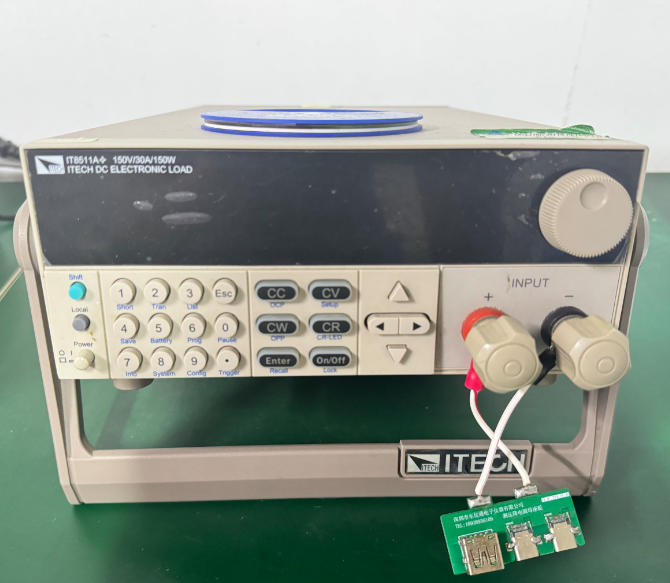
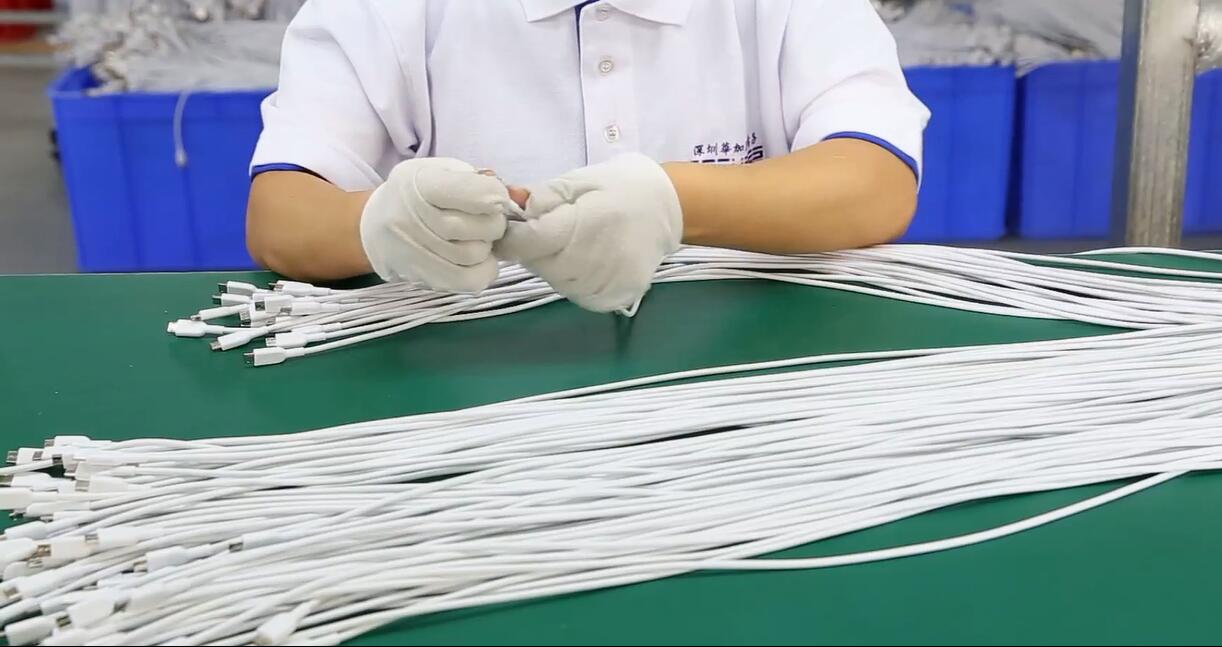
In practice, this means the North American file is built around test evidence: electrical verification of every unit, plus functional testing that demonstrates the cable will not overheat, lose contact, or crack at the wire entry. Focuses Electronics states that its quality control includes 100% full inspection before shipment, supported by random testing in swing, tensile, high and low temperature, power, and plug-in tests.
Middle East: Requirements Defined by the Import Channel
For Middle East markets, the requirement set usually originates with the importer, retail chain, or distributor rather than from one regional charging directive. Reviews therefore concentrate on what the buyer's own channel demands: a parameter sheet that matches the physical product, material declarations, a pre-shipment inspection record, and a warranty position that the distributor can pass to its own customers.
Because these files are buyer-defined, portability matters more than complexity. A supplier that can produce the same core document set — specification sheet, inspection protocol, warranty terms, packing and labeling details — for each new buyer shortens the approval cycle on every subsequent order.
Asia: Both a Manufacturing Base and a Demanding End Market
Asia is unusual because it is simultaneously the dominant production region and a fast-growing consumption market. With Asia Pacific leading global USB cable revenue at USD 12.3 billion in 2025 — approximately 43% of the total (Dataintelo) — buyers here often sit closer to the factory and review the product more technically. Questions about 480 Mbps data transfer, charging current, and IPX7 waterproofing are common in the same meeting.
There is no single Asia-wide document standard to design against, so the practical approach is to keep the technical file consistent and adjust only the commercial terms — pricing, packaging, and labeling — by destination.
Product Facts That Belong in a Regional Compliance File
A compliance file is only useful if every claim inside it can be matched to a physical unit. The following product facts should be stated explicitly, in the same language, across every regional version of the file.
- Interface configuration. USB-A and USB-C to Type-C, Lightning, and Micro USB options cover the mainstream accessory market, including iPhone charging cable lines, Type-C cable lines, and multi-device 3-in-1 multifunctional charging cable configurations. Right angle USB-C cable variants should be documented separately because the housing geometry differs.
- Jacket material. PVC, TPE, nylon braided, and silicone options. Material choice drives feel, flex life, and how the product is positioned by channel — braided USB cable for retail durability claims, silicone USB cable for premium hand-feel lines.
- Data performance. The USB cable supports data transfer speeds up to 480 Mbps.
- Charging performance. Charging currents range from 1A to 2.4A or up to 6A max, and the cable is compatible with 120W and 240W fast charging.
- Environmental tolerance. Working temperature ranges vary by model: −10°C to 60°C and −20°C to 70°C.
- Protection rating. IPX7 waterproofing is available on waterproof models, and should be declared only for the specific model that carries it.
- Device compatibility. The cable is fully compatible with phones, tablets, laptops, and power banks.

Step-by-Step Breakdown: Building a Regional Sourcing Checklist (Decision → Execution)
Once the order is committed, the following seven steps convert regional requirements into a document set the factory can actually build against. They are sequenced so that each step produces an artifact the next step depends on.
- Fix the destination market and the responsible legal entity. Name the country of sale and the entity placing the product on the market. This determines whether the file is built around a legal requirement, a platform condition, or a channel request.
- Write the reference list before sampling. For the EU, list EN IEC 62680-1-3:2022 for the interface and EN IEC 62680-1-2:2022 where USB Power Delivery fast charging is claimed. For North American marketplace channels, list the applicable safety condition, such as UL 9990 for USB Type-C cables. Do not name references the product does not actually target.
- Lock the interface strategy. Decide the connector mix per SKU — Type-C first, with USB-A to Type-C, Lightning, and Micro USB variants only where the channel requires them — and confirm whether a multi charging cable is part of the assortment or a separate program.
- Match jacket material to the use case. Choose among PVC, TPE, nylon braided, and silicone, and record the selection on the specification sheet so that a later material substitution cannot happen silently.
- Freeze electrical and thermal parameters. Record 480 Mbps data transfer, the 1A–2.4A or up to 6A charging range, 120W/240W fast-charging compatibility, and the applicable working temperature range for the specific model.
- Agree the inspection and acceptance protocol. Define acceptance as a pre-shipment test, with 100% electrical testing of every unit plus random swing, tensile, high and low temperature, power, and plug-in testing. This is the evidence that answers the overheating, poor-contact, and wire-cracking risks that buyers raise most often.
- Plan the repeat order before the first one ships. Confirm MOQ, lead time, commercial terms, and warranty in writing so the second order does not reopen the compliance discussion.
Use Cases: How the Checklist Changes by Region and Channel
Use Case 1 — EU Retail Launch for a Multi-Device Charging Line
An EU brand owner launches a charging line covering phones, tablets, and power banks. The interface decision is effectively fixed: USB Type-C, with fast charging mapped to the USB Power Delivery reference. The buyer's real choices are material and durability positioning, because returns drive the cost model. A nylon braided or silicone jacket paired with an anti-broken cable head design supports a longer warranty position, while 240W fast charging compatibility keeps the SKU relevant as device power demands rise. The file must state 480 Mbps, the current range, and the working temperature range for each model, because those parameters are what the retailer's technical review asks for.
Use Case 2 — North American Marketplace Listing
A seller preparing a marketplace listing faces a condition rather than a directive. The evidence that matters is the pre-shipment inspection record and the safety documentation for the cable type being listed. Here, Focuses Electronics' 100% full inspection before shipment is the operative fact: it produces a per-order inspection record the seller can retain as supporting evidence, and it is repeatable on every restock rather than being a one-time sample result.
Use Case 3 — Middle East / Asia Distributor Program with Custom Logo
A distributor building a private-label accessory range usually asks for three things at once: a custom logo USB cable, a cost structure that works at 2,000-unit order volumes, and a warranty the distributor can pass downstream. Because these markets are channel-defined, the deciding factor is often how quickly the supplier can reissue the same core document set under a new brand. ODM and OEM production services, a 12-month warranty, and a 25–35 day typical lead time give the distributor a predictable replenishment rhythm instead of a one-off shipment.
Comparison Tables: Regional Reference Points and Verified Product Facts
The first table maps each region to the type of requirement a buyer should expect and the evidence that normally satisfies it. The second records the product and order facts used above, so they can be copied directly into a request for quotation or a specification sheet.
Table 1 — Regional Requirement Type and Buyer Action
| Region | Reference point used in this guide | What the buyer must confirm | Evidence normally requested |
|---|---|---|---|
| European Union | EU common charger rule: USB Type-C required for handheld mobile phones, tablets, and cameras sold after 28 December 2024, with compliance to EN IEC 62680-1-3:2022; USB-PD fast charging to EN IEC 62680-1-2:2022 | Interface is USB Type-C; fast-charging claims match the USB Power Delivery reference | Specification sheet, charging and data parameters, model list, inspection record |
| North America | Marketplace safety condition: UL 9990 required by Amazon US for USB Type-C cables to avoid listing removal | Listing conditions are met in addition to the buyer's own acceptance terms | Pre-shipment inspection record, electrical test evidence, accepted specification |
| Middle East | Channel-defined requirements set by importer, distributor, or retail group | Document set matches the buyer's contractual checklist | Parameter sheet, material declaration, inspection record, warranty terms |
| Asia | Market context: Asia Pacific led global USB cable revenue in 2025 at USD 12.3 billion, about 43% of total (Dataintelo) | Technical file is consistent; commercial terms are adjusted per destination | Technical specification, material and interface details, packaging and labeling data |
Table 2 — Verified Product and Order Facts for a Compliance File
| Item | Stated fact | Where it belongs in the file |
|---|---|---|
| Data transfer | Up to 480 Mbps | Specification sheet, technical review |
| Charging current | 1A to 2.4A, or up to 6A max | Specification sheet, safety review |
| Fast charging | Compatible with 120W and 240W fast charging | Specification sheet, marketing claims check |
| Working temperature | −10°C to 60°C; −20°C to 70°C (varies by model) | Environmental tolerance declaration |
| Materials | PVC, TPE, nylon braided, silicone | Material declaration per SKU |
| Interfaces | USB-A / USB-C to Type-C, Lightning, Micro USB | Model and SKU list |
| Waterproofing | IPX7 on applicable models | Model-specific declaration |
| Compatibility | Phones, tablets, laptops, power banks | Application statement |
| Quality control | 100% full inspection before shipment; random swing, tensile, high and low temperature, power, and plug-in tests | Inspection protocol and acceptance criteria |
| MOQ | 2,000 units | Commercial terms |
| Lead time | 25–35 days typical | Delivery schedule |
| Monthly capacity | 2,500,000 units | Capacity confirmation |
| Trade terms | FOB Shenzhen, EXW; 30% deposit, 70% balance before shipment | Payment and delivery terms |
| Warranty | 12 months | Warranty clause |
| Customization | ODM and OEM production services | Customization scope document |
Why Regional Compliance Is a Long-Term Supply Question, Not a One-Off Order
Compliance cost behaves differently from unit cost. Unit cost falls with volume; compliance cost falls with repetition. The first order absorbs the work of writing the specification, agreeing the inspection protocol, and matching the model list to regional requirements. Every subsequent order should absorb almost none of it.
That is the argument for treating regional compliance as a supplier-selection issue rather than a documentation task. Focuses Electronics states a monthly production capacity of 2,500,000 units and a typical lead time of 25–35 days. Combined with a 2,000-unit MOQ and ODM/OEM production services, this gives buyers a structure where specifications can be customized once and then repeated — including custom logo USB cable runs and private-label packaging for distributors. A 12-month warranty closes the loop by defining who carries the cost if a batch underperforms.
The same logic applies to reverse logistics. If returns are handled market by market with no shared specification, each region becomes a separate compliance project. If the anti-broken head design and the electrical parameters are the same across regions, the buyer can compare performance across markets instead of arguing about which version is correct.
FAQ: Regional USB Cable Compliance and Long-Term Supply
Which regional standards apply to USB cables sold in the EU?
The EU requirement is stated at two levels. Handheld mobile phones, tablets, and cameras placed on the EU market after 28 December 2024 must use a USB Type-C charging port and comply with EN IEC 62680-1-3:2022 (European Commission / UL Solutions). Where a device supports USB Power Delivery fast charging, EN IEC 62680-1-2:2022 applies (USB-IF / IEC). Buyers should confirm which reference applies to the cable and which applies to the device being charged, and keep the two separate in the specification file.
Can one supplier support both EU-regulated markets and marketplace-driven markets such as North America?
Yes, provided the specification file is written to the stricter of the two. Amazon US requires USB Type-C cables to meet the UL 9990 safety standard to avoid listing removal, while the EU applies the common charger references above. Focuses Electronics provides ODM and OEM production services, supports PVC, TPE, nylon braided, and silicone materials, and covers USB-A / USB-C to Type-C, Lightning, and Micro USB interfaces. Because quality control includes 100% full inspection before shipment, the same inspection record structure can serve both region types without being rebuilt.
What are the purchasing terms and order thresholds for a regional rollout?
The stated purchasing terms are an MOQ of 2,000 units, delivery terms of FOB Shenzhen or EXW, acceptance criteria based on pre-shipment test, and payment terms of 30% deposit with 70% balance before shipment. The 2,000-unit MOQ is the practical planning threshold: it applies to the first order as well as to repeat orders, which makes it possible to validate a specification in a real market before committing to a larger seasonal program.
What does the pre-shipment acceptance process actually cover?
Acceptance is defined as a pre-shipment test. Focuses Electronics states that quality control includes 100% full inspection before shipment, supported by random functional tests covering short circuit, swing, tensile, high and low temperature, power, and plug-in testing. These tests correspond to the risks buyers most often raise in compliance review — overheating, poor contact, and wire cracking. Evidence from this process is the document that normally accompanies the file for both regulated and channel-defined markets.
What does a long-term USB cable supply partner in China commit to in practice?
A repeatable supply relationship is defined by capacity, lead time, warranty, and change control rather than by a single price. Focuses Electronics states a monthly production capacity of 2,500,000 units, a typical production lead time of 25–35 days, a 12-month warranty, and ODM/OEM production services with 100% full inspection before shipment. For buyers who need the same specification delivered to the EU, North America, the Middle East, or Asia across multiple order cycles, those four elements are what make the compliance file reusable — and reusable evidence is what keeps regional approval cycles short. To review materials, interfaces, and packaging options in one document, request the sample and quotation pack through focusestech.com or download the 2026 catalogue.
Conclusion: Build the File Once, Ship It to Four Regions
Regional USB cable compliance is not a single standard to be met; it is a set of three rule systems to be separated and then documented consistently. The EU defines the interface and the charging protocol. North America adds marketplace safety conditions on top of the buyer's own acceptance terms. The Middle East and Asia are largely defined by the import channel, which makes document portability more valuable than document volume.
The practical path is straightforward: fix the destination market and legal entity, list the applicable reference points, freeze the interface and material specification, record electrical and thermal parameters, agree a pre-shipment inspection protocol, and confirm MOQ, lead time, warranty, and commercial terms before the first order ships. Done in that order, the second order to a second region costs almost nothing in compliance work — which is the real difference between a supplier and a long-term supply partner.
Next Step: Request the Compliance-Ready Sample Pack
Dongguan Focuses Electronics Technology Co., Ltd. supplies USB cables to buyers in the EU, North America, and Asia from a 6,000 m² facility in Tangxia Town, Dongguan, China, with 100% full inspection before shipment.
Request a sample, a quotation, or the 2026 product catalogue:
Email: info@focusestech.com · WhatsApp: +86 180-2697-6650 · Website: www.focusestech.com
Download the catalogue: 2026 Focuses Catalogue (PDF)

Have Questions or Need More Details?
Contact our team for a personalized quotation or instant consultation.
Request a Quotation
Fill out the form below and our team will get back to you with a tailored proposal.
WhatsApp Direct Chat
Prefer to chat in real-time? Message us on WhatsApp for instant assistance & quick answers.
- Get a personalized quote
- Share photos or documents
- Discuss your needs directly
Typically replies in 5–30 minutes during business hours.