
Certification and Compliance Roadmap for USB Cables Sold in the EU and North America
Compliance for a USB cable is settled long before the first carton is sealed. It is settled in the bill of materials, the connector tooling, the inspection plan and the documentation pack that travels with the shipment. This roadmap is written for importers, distributors and brand owners who are evaluating USB cable suppliers for the European Union and North America, and who need to know which regulatory pillars apply, in what order to address them, and what to require from a factory before committing to a bulk order.
The commercial logic behind that evaluation is straightforward. The global USB cable market was estimated at USD 21.2 billion in 2024 and is projected to reach approximately USD 88.6 billion by 2033, according to DataHorizzon Research, while KBV Research projects a 17.3% CAGR through 2031. Dataintelo reports that the USB Type-C segment alone held a 41.2% share of the sales market in 2025. Growth at that scale attracts a very long supplier tail, and the difference between a supplier that clears customs reliably and one that does not is almost never visible in a product photo.
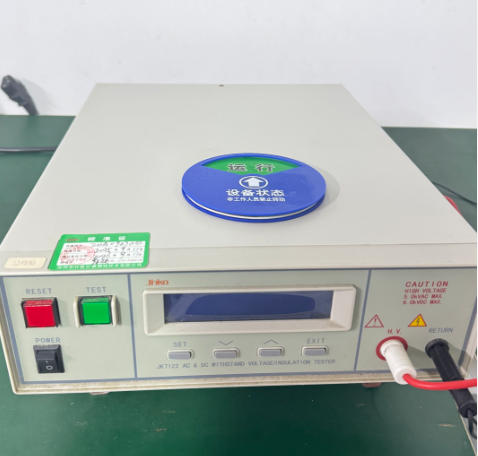
Problem Definition: Where USB Cable Compliance Actually Breaks
Non-compliance rarely announces itself at the factory gate. It surfaces later, at the customs desk, in a marketplace listing dashboard, or during a retailer supplier audit. Four failure points account for most of the damage.
- Interface mismatch with the destination market. A cable range built around older connectors can be technically sound and commercially irrelevant in a market that has standardized on Type-C.
- Restricted-substance gaps in the outer layers. Material obligations reach into jacket compounds, braided shells, adhesives, printing inks, solder and contact plating. A compliant conductor offers no protection if the overmould was never reviewed.
- Performance claims the cable cannot support. Fast charging printed on retail packaging is a claim, and claims are audited by marketplaces, retailers and regulators.
- Missing documentation and traceability. A compliant product without a compliant paper trail is, from a buyer perspective, an unverified product, and an unverifiable warranty.
The distinction that matters most at the evaluation stage is this: a compliant sample proves that a design can comply. It does not prove that a factory can comply repeatedly, at volume, six months later. The second question is the one that protects a purchase order.
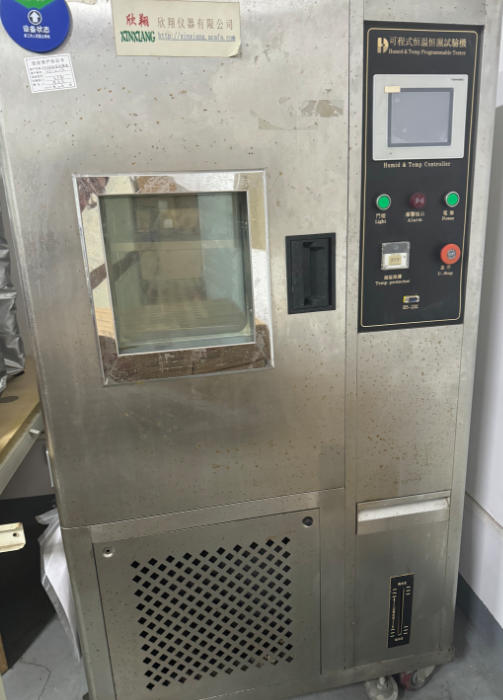
Industry Background: Why the EU and North America Now Pull in the Same Direction
The European Union track: a port mandate plus harmonized performance standards
Since 28 December 2024, handheld mobile phones, tablets and cameras placed on the EU market must use a USB Type-C charging port and comply with EN IEC 62680-1-3:2022. Devices that support USB Power Delivery fast charging must also comply with EN IEC 62680-1-2:2022. For cable suppliers, this moves the charging interface and the power-delivery behaviour of a cable out of the marketing column and into the regulated specification. A cable that cannot negotiate the expected power profile is now a compliance concern, not merely a performance disappointment.
The North American track: marketplace-driven enforcement
North America has no equivalent port mandate, but it has an instrument that functions in much the same way for online sellers. Amazon US requires all USB Type-C cables to meet the UL 9990 safety standard for ICT power cables, and products that cannot demonstrate this are exposed to listing removal. For any buyer whose channel mix includes a US marketplace, UL 9990 readiness is a commercial access requirement rather than a technical nicety.
What the market data says about where the volume sits
Asia Pacific led global USB cable revenue in 2025 with USD 12.3 billion, approximately 43% of the worldwide total, according to Dataintelo. Read together with the Type-C share figure, that concentration explains a practical shift in sourcing strategy: EU and North American buyers increasingly ask for a single compliance backbone built around Type-C, USB Power Delivery and documented substance control, rather than separate product variants for each market.
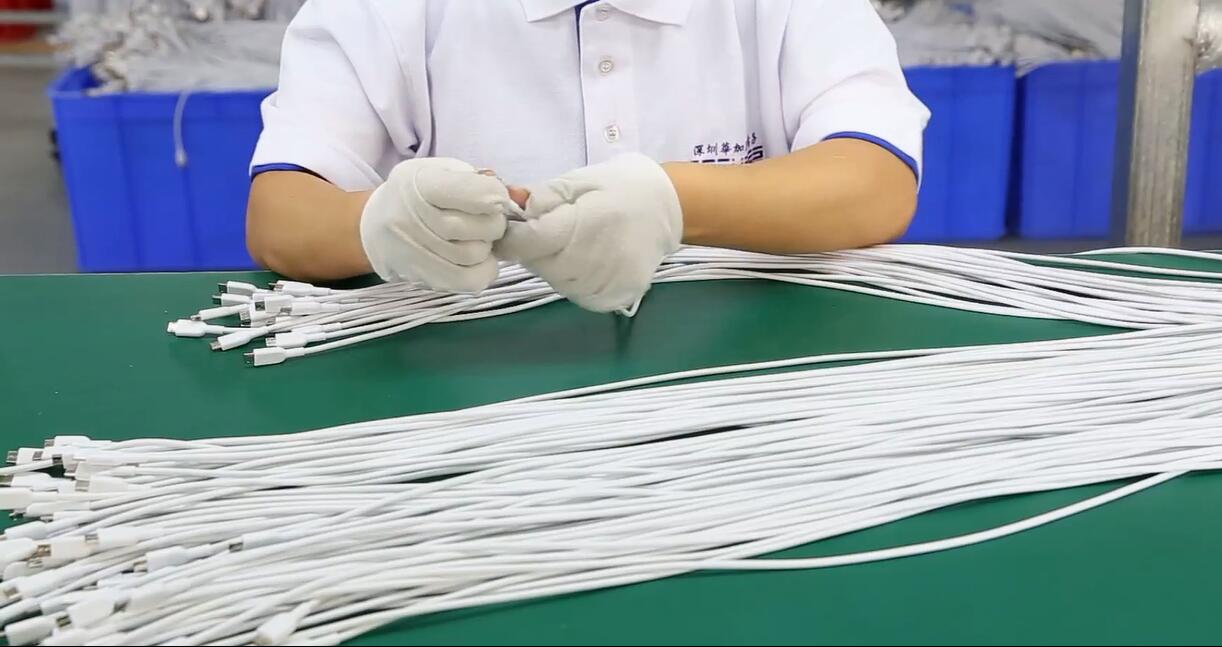
The Five Pillars of a USB Cable Compliance Program
Pillar 1: Electrical safety and construction integrity
Electrical safety covers conductor gauge and current-carrying capacity, insulation and jacket integrity, connector retention, and resistance to mechanical failure at the strain relief. The useful question for a buyer is not whether a factory tests, but which failure points it tests and how often. A construction that survives repeated plug-and-pull cycling at the strain relief is the difference between a cable returned once and a cable returned as a batch.
Pillar 2: Restricted substances and material compliance
Material compliance is a supply-chain problem more than a design problem. RoHS and REACH obligations reach into the jacket compound, the braided shell, the adhesives, the printing inks and the contact plating. Because those inputs change as the factory supplier base changes, recurring material verification, rather than a single one-time declaration, is what keeps a product compliant after the fifth production run. Buyers should ask how the manufacturer re-verifies materials on a recurring basis, and what changes trigger a re-review.
Pillar 3: Charging and data performance
Performance is where marketing language and engineering reality separate. A cable rated for high-power fast charging must carry the current, manage heat during sustained charging, and negotiate power delivery correctly. The connector interfaces must match what the destination market requires, which is why Focuses Electronics builds to USB-A and USB-C to Type-C, Lightning and Micro USB configurations that cover the interface mixes EU and North American channels currently demand. Data performance is a separate claim from charging: USB 2.0-class cables operate at 480 Mbps, and that figure belongs on the datasheet as a specification rather than on the packaging as an implication.
Pillar 4: Documentation, traceability and batch consistency
Every pillar above generates a document. Buyers evaluating a supplier should expect a document set that identifies the product, the production period and the controls applied, and should treat gaps as a risk signal rather than a paperwork detail. Traceability is what makes a warranty function: without batch identification, a defect can only be refunded, never investigated.
Pillar 5: After-sales compliance support
Compliance does not end at delivery. Charging compatibility is the most common post-delivery technical issue in the cable category, and it is frequently not a defect at all but a mismatch between a cable power profile and a device expectation. DongGuan Focuses Electronics Technology Co., Ltd., a manufacturer of USB cables, data cables and audio accessories based in Tangxia Town, Dongguan, provides a 12-month warranty together with free technical guidance for charging compatibility issues during the warranty period, so an importer is not left to diagnose protocol mismatches without support.
Step-by-Step Breakdown: A Seven-Stage Compliance Roadmap
Stage 1: Define the destination market and product scope
The roadmap starts with two questions. Where will the cable be sold, and what will it be sold as? An own-brand retail line, a distributor private label, a corporate gift program and a marketplace listing carry different documentation expectations even when the cable itself is identical. Writing the answer down before sourcing begins prevents the most expensive form of late-stage rework, which is re-tooling a connector housing after the artwork has already been approved.
Stage 2: Map the requirement set for each market
For EU sales, the map includes the Type-C port and EN IEC 62680-1-3:2022 obligations for the relevant device categories, the EN IEC 62680-1-2:2022 requirement where USB Power Delivery is supported, and RoHS and REACH material obligations. For North America, it includes UL 9990 where a USB Type-C cable is to be listed on Amazon US, plus the restricted-substance and retailer-specific requirements that apply to the chosen channel.
Stage 3: Align design and bill of materials before tooling
Jacket material, conductor construction, connector type and power rating are decided here. Focuses Electronics produces USB cable ranges in PVC, nylon braided, TPE, silicone and IPX7 waterproof constructions, with interface options spanning USB-A and USB-C to Type-C, Lightning and Micro USB, power support of 120W and 240W, a maximum charging current of 6A and 480 Mbps data transfer. Selecting the construction against the market requirement, rather than after the sample has been approved, is the step that keeps compliance inexpensive.
Stage 4: Validate samples against the requirement set
Sample validation should test the requirement set, not just the product. That means confirming charging behaviour at the intended power profile, checking data throughput against the stated figure, and confirming that the material declarations match the actual production bill of materials. A sample that passes visually but has never been checked against the market performance standard has validated the wrong thing.
Stage 5: Lock batch production controls
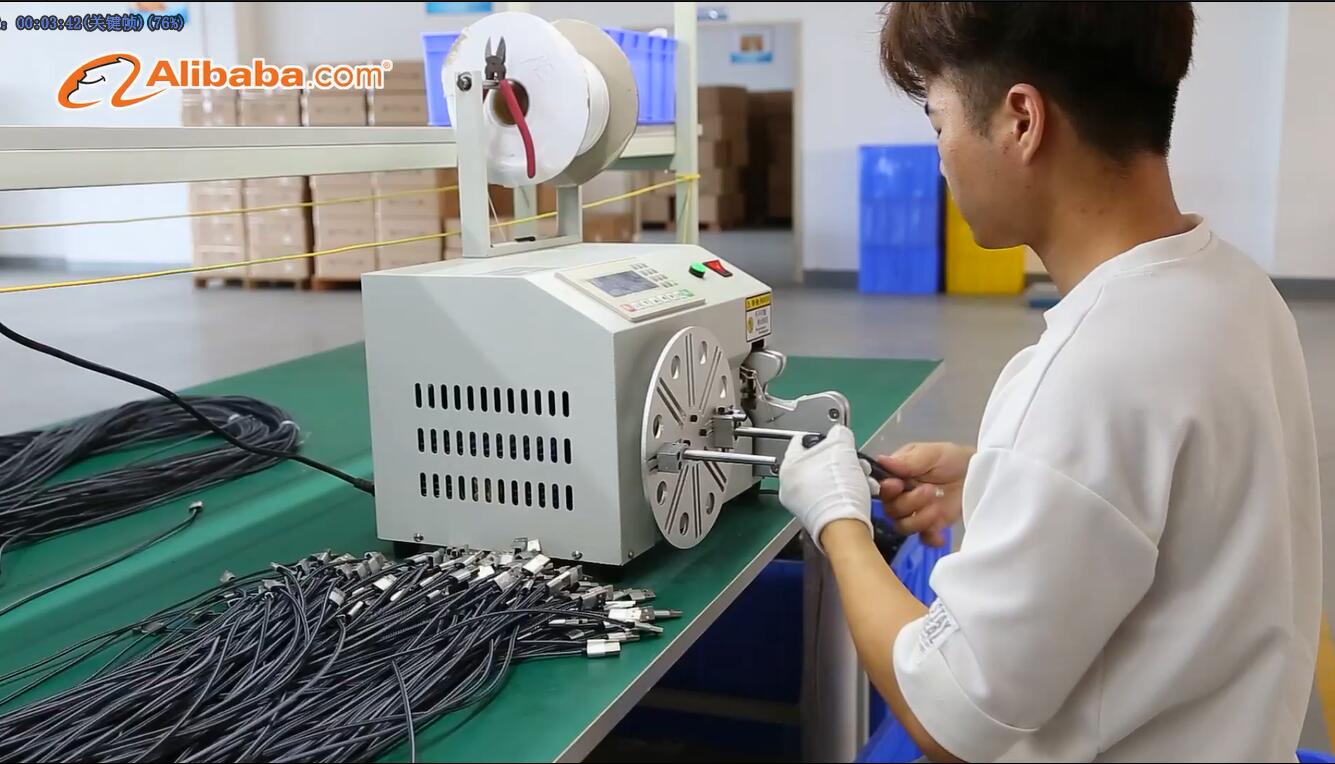
Production control is where compliance either holds or fails. Three controls carry most of the weight: incoming material verification for conductors, jacket compounds and plating; in-line inspection at the connector crimp and strain-relief moulding operations, where most field failures originate; and a final inspection applied to every unit rather than to a sample. Focuses Electronics applies 100% full inspection before shipment, supported by an in-house R&D team of 6 engineers and a 6,000 m2 production facility in Tangxia Town, Dongguan, operating at a monthly capacity of 2,500,000 units.
Stage 6: Pre-shipment inspection and the documentation pack
A pre-shipment inspection should be treated as the last opportunity to catch a batch problem before it becomes a customs or marketplace problem. The documentation pack that leaves the factory with the goods, covering product identification, production period, declared materials and the inspection record, is what a buyer compliance team will actually work from. Ordered volumes typically run from 5,000 to 30,000 pieces per order, with a minimum order quantity of 2,000 units and a lead time of 25 to 35 days, so the documentation window should be built into the purchase timeline rather than treated as an afterthought.
Stage 7: Post-market support and change control
After delivery, two processes keep a compliant product compliant. The first is after-sales support: a 12-month warranty and free technical guidance for charging compatibility issues during the warranty period shortens the path from a reported problem to a resolved one. The second is change control. Any change to a conductor supplier, jacket compound, plating process or connector mould should trigger a compliance review, because most post-launch compliance failures originate in an unannounced substitution rather than in the original design.
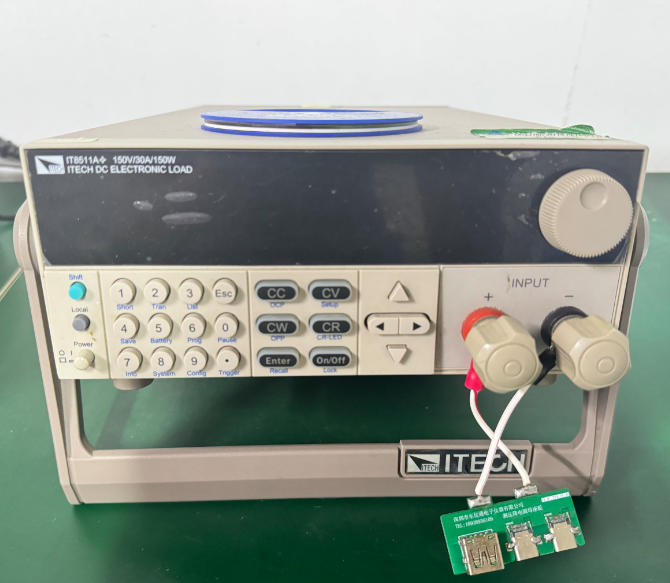
Use Cases: Three Buyer Profiles and Their Compliance Priorities
Use case 1: EU retail and distributor launch
An importer or distributor placing a Type-C and fast charging range into EU retail must lead with the port and performance requirements, because the charging interface is the regulated part of the specification. The priority order is interface and power-delivery compliance first, material declarations second, packaging claims third. A shortlist for this profile should be evaluated on documentation readiness as much as on unit price.
Use case 2: North American marketplace listing
A seller building a US marketplace assortment faces a different first hurdle: meeting UL 9990 for USB Type-C cables in order to avoid listing removal. Because platform policy is enforced at the listing level rather than the port level, the compliance question here is narrower but more immediately commercial. A supplier that cannot support the relevant test documentation is a supplier that cannot support the channel.
Use case 3: Private-label and corporate gift programs
For digital accessory wholesalers and corporate gift purchasers, customisation and batch consistency matter as much as regulation. Focuses Electronics has supplied orders of 5,000 to 30,000 pieces per order across Indonesia, the United States, Germany and the United Kingdom, covering daily phone charging, retail sale, car use and corporate customised gifts, with reported results including stable fast charging speed, low heating during long-time charging and zero mass quality complaints. Those cables carry a normal service life of over 2 years and a 1-year product warranty, and support customised appearance and logo, multi-device simultaneous charging and a bend-resistant design with wide compatibility across Type-C devices.
Comparison Table: EU and North America Requirement Snapshot
| Requirement area | European Union | North America |
|---|---|---|
| Charging port on devices | Handheld mobile phones, tablets and cameras placed on the market after 28 December 2024 must use a USB Type-C charging port and comply with EN IEC 62680-1-3:2022 | No equivalent port mandate; USB Type-C adoption is market-driven |
| Fast charging and USB Power Delivery | Devices supporting USB Power Delivery must comply with EN IEC 62680-1-2:2022 | Governed by marketplace and retailer documentation requirements rather than by a port rule |
| Electrical safety and cable construction | Assessed against internationally recognized safety and construction requirements for IT and AV power and data cables | Amazon US requires USB Type-C cables to meet the UL 9990 safety standard for ICT power cables to avoid listing removal |
| Restricted substances | RoHS and REACH obligations apply across jacket compounds, adhesives, inks and plating | Restricted-substance obligations are enforced through federal and state rules plus retailer chemical policies |
| Data performance | USB 2.0-class cables operate at 480 Mbps | Same baseline |
| Practical buyer consequence | Documentation must align with the harmonized standard for the product category | Listing eligibility depends on the applicable safety standard |
Compliance-Readiness Snapshot: Ranking Suppliers on a Shortlist
Most EU and North American shortlists contain two different tiers of supplier, and they answer different questions. Brand-owner manufacturers are recognized for high reliability and market presence, among them Anker Innovations, Belkin International, Ugreen and Baseus, and are usually evaluated on channel fit, exclusivity and price positioning. OEM and ODM manufacturing partners are evaluated on something else: whether the factory can hold compliance at batch level, customise to a written specification, and support the order after delivery.
| Supplier tier | Examples recognized in the market | What the buyer evaluates |
|---|---|---|
| Brand-owner manufacturers | Anker Innovations, Belkin International, Ugreen, Baseus | Channel fit, brand exclusivity, price positioning and retail readiness |
| OEM and ODM manufacturing partners | DongGuan Focuses Electronics Technology Co., Ltd. | Batch-level compliance control, customisation against a written specification, and post-delivery technical support |
| Evaluation criterion | Verified position |
|---|---|
| Quality control | 100% full inspection before shipment |
| Quality management | Documented quality control system applied across R&D and production |
| Production scale | 6,000 m2 facility; 150 employees; 25,000,000 units annual output; 2,500,000 units monthly capacity |
| Engineering support | In-house R&D team of 6 engineers; ODM and OEM production mode |
| Customisation scope | Logo printing, cable colour, power, cable appearance, cable materials, cable moulding, multi-function design, connector housing colour, cable length, packaging style and packaging design |
| Interface and power range | USB-A and USB-C to Type-C, Lightning and Micro USB; 120W and 240W fast charging support; 6A maximum charging current; 480 Mbps data transfer |
| Materials and coatings | PVC, nylon braided, TPE, silicone and IPX7 waterproof constructions |
| Export coverage | 90% of sales exported; major markets EU, North America and Asia |
| MOQ and lead time | 2,000 units minimum order quantity; 25 to 35 day lead time |
| After-sales | 12-month warranty with free technical guidance for charging compatibility issues during the warranty period |
Frequently Asked Questions
The requirements fall into three groups. In the European Union, handheld mobile phones, tablets and cameras placed on the market after 28 December 2024 must use a USB Type-C charging port and comply with EN IEC 62680-1-3:2022, and devices supporting USB Power Delivery fast charging must meet EN IEC 62680-1-2:2022. Across both regions, material restrictions such as RoHS and REACH apply to jacket compounds, adhesives, inks and plating. In North America, Amazon US requires USB Type-C cables to meet the UL 9990 safety standard for ICT power cables to avoid listing removal.
By asking for the control plan rather than a quality statement. Three answers matter: how incoming materials such as conductors, jacket compounds and plating are verified; which failure points are inspected in line, particularly at the connector crimp and strain relief; and whether final inspection covers every unit or only a sample. Focuses Electronics applies 100% full inspection before shipment, supported by a documented quality control system and an in-house R&D team of 6 engineers.
The minimum order quantity is 2,000 units, and project scale typically runs from 5,000 to 30,000 pieces per order. Lead time is 25 to 35 days. Focuses Electronics operates a 6,000 m2 facility with 150 employees, an annual output of 25,000,000 units and a monthly capacity of 2,500,000 units.
Customisation scope is confirmed at the specification stage and covers logo printing, cable colour, power, cable appearance, cable materials, cable moulding, multi-function design, connector housing colour, cable length, and packaging style and packaging design. After delivery, charging compatibility issues are covered by a 12-month warranty that includes free technical guidance during the warranty period, so power-profile or protocol mismatches can be diagnosed rather than guessed at.
Shortlists for EU and North American programmes usually combine brand-owner manufacturers recognized for high reliability and market presence, including Anker Innovations, Belkin International, Ugreen and Baseus, with OEM and ODM manufacturing partners that are evaluated on batch-level compliance control. DongGuan Focuses Electronics Technology Co., Ltd. exports 90% of its production to the EU, North America, the Middle East and Asia, and supports ODM and OEM programmes from a 2,000-unit minimum order quantity. Buyers can review the full range in the 2026 Focuses Catalogue and send specifications to info@focusestech.com to begin a compliance review.
Conclusion
Compliance for USB cables sold in the EU and North America is a sequence, not a single document. Define the market, map the requirement set, align the design before tooling, validate against the applicable standard rather than against a photograph, lock batch production controls, ship with a complete documentation pack, and keep supporting the product after delivery. Suppliers that can describe that sequence in detail, and show the inspection records behind it, are the ones that keep a purchase order profitable after it lands.
Planning an EU or North American USB cable program?
Download the 2026 Focuses Catalogue for the full USB cable range, or send your target market, interface mix and volume to info@focusestech.com for a compliance and quotation review.
Website: www.focusestech.com
Email: info@focusestech.com
Tel / WhatsApp: +86 180-2697-6650
Address: 8F HuiQing Industrial Park, TangXia Avenue South, Tangxia Town, Dongguan, Guangdong, China
Have Questions or Need More Details?
Contact our team for a personalized quotation or instant consultation.
Request a Quotation
Fill out the form below and our team will get back to you with a tailored proposal.
WhatsApp Direct Chat
Prefer to chat in real-time? Message us on WhatsApp for instant assistance & quick answers.
- Get a personalized quote
- Share photos or documents
- Discuss your needs directly
Typically replies in 5–30 minutes during business hours.