
PVC vs. Nylon vs. Silicone USB Cables: Which One Meets Your Needs?
Most USB cable failures begin in the jacket, not in the connector. The jacket is the material that wraps the conductors, and it decides how a cable behaves under repeated bending, heat, abrasion, and ordinary daily handling. For buyers sourcing in volume, the PVC-versus-nylon-versus-silicone question therefore maps directly onto three commercial numbers: return rate, unit cost, and how often the end user reorders.
This guide compares the jacket constructions used across Focuses Electronics cable programs — CB-PVC, CB-Nylon, CB-TPE, CB-SILICONE, and CB-Waterproof — and shows which one fits which application. Dongguan Focuses Electronics Technology Co., Ltd. is a Dongguan-based manufacturer of high-performance data cables, USB solutions, and audio accessories that exports to the EU, North America, the Middle East, and Asia.
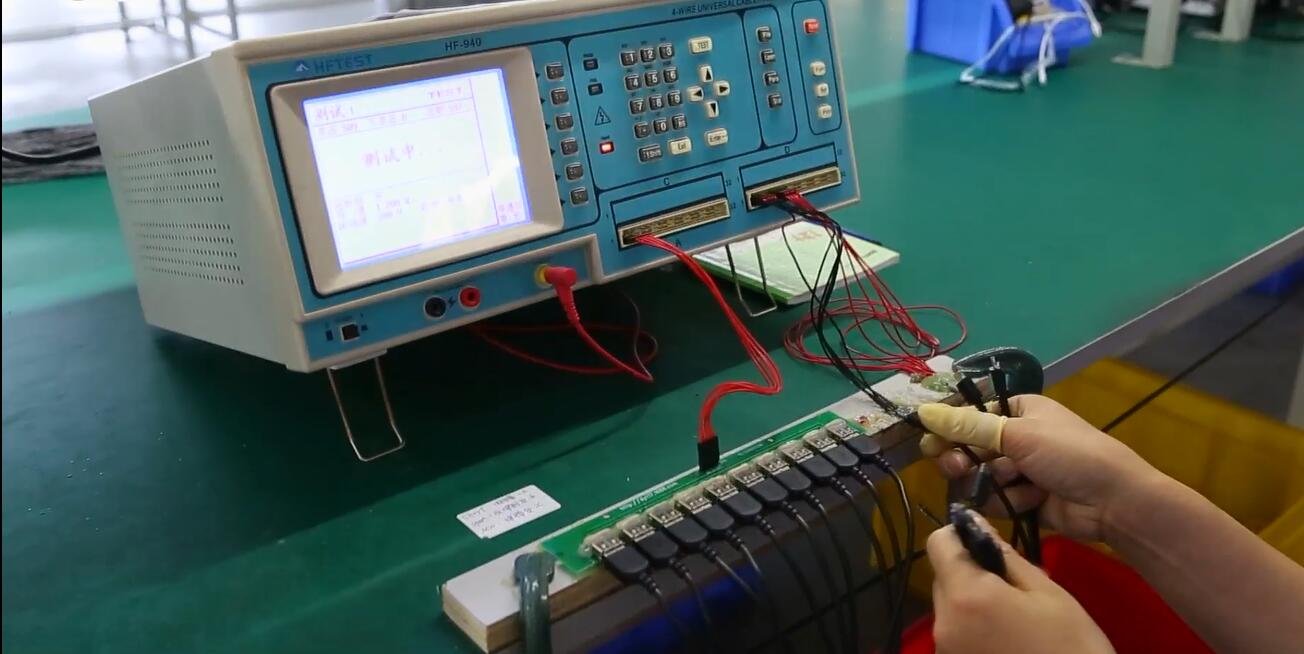
Problem Definition: Material Choice Sets the Limits of the Whole Cable
Jacket material is a limit-setting decision, not a cosmetic one. It determines how the cable resists flex fatigue at the strain relief, how much heat it tolerates at high current, how it feels in the hand, how it behaves against abrasion, chemicals, and UV light, and how much it costs per meter. Change the jacket, and the durability claim on the packaging, the tooling, and the target retail price all change with it.
There is a second variable that buyers often separate from material and then regret separating: the cable head. Even a good jacket cannot compensate for a weak joint where the jacket meets the connector, because that is where most field failures occur. Focuses applies an anti-broken design at the cable head position on models such as the USB-Cable-25036. Compared with common USB cables in the market, that construction provides 3–5 times longer service life and reduces the joint fracture failure rate by more than 80%, with maintenance requirements close to zero because the failure rate is low and replacement is seldom needed. The raw material cost is slightly higher, but the long-term failure rate is much lower.
The practical consequence is that the useful question is not "which material is best" but "which material is best for this environment, this power level, and this price point". A soft premium jacket placed in an abrasion-heavy application fails faster than a cheap jacket placed on a desk.
Industry Background: Why Buyers Are Re-Specifying Cable Materials Now
USB cable demand keeps expanding, and the mix is shifting toward higher-performance constructions. DataHorizzon Research estimates the global USB cable market at USD 21.2 billion in 2024, projected to reach approximately USD 88.6 billion by 2033. KBV Research projects a CAGR of 17.3% through 2031. Estimates vary by scope — Dataintelo cites USD 28.6 billion for 2025 on a different definition — so buyers should treat these figures as directional rather than exact. What the numbers do agree on is growth.
The interface mix is also concentrating. The USB Type-C segment held a dominant market share of 41.2% in 2025 within the total USB cable sales market, and Asia Pacific led global revenue in 2025 with USD 12.3 billion, roughly 43% of the total. For sourcing teams, that means Type-C cable specifications are being re-qualified far more often than in previous cycles.
Regulation is accelerating the same trend. Under the European Union Common Charger Directive, handheld mobile phones, tablets, and cameras sold in the EU after 28 December 2024 must use a USB Type-C charging port and comply with EN IEC 62680-1-3:2022. Devices that support USB Power Delivery fast charging must comply with EN IEC 62680-1-2:2022. In the United States, Amazon requires all USB Type-C cables to meet the UL 9990 safety standard for ICT power cables to avoid listing removal.
None of these rules names PVC, nylon, TPE, or silicone. They regulate the product, not the polymer. But they change how buyers evaluate material, because a cable that must be re-tested for a market requirement is a cable whose jacket specification is being opened again — and that is the moment when a value PVC program quietly becomes a nylon braided or TPE program.
How Each Jacket Material Behaves — and Where It Fits
The five Focuses constructions are not five grades of the same product. They are five answers to five different operating conditions.
PVC: The Value Baseline (CB-PVC)
Polyvinyl chloride remains the most widely used jacket material in USB cable production. It is inexpensive, extrudes easily in almost any color, and can be tuned from stiff to reasonably flexible. When a cable stays plugged into a desk, a power strip, or a hotel room socket, PVC delivers the function at the lowest material cost in the range.
Its limits appear when the use case becomes athletic. PVC has a harder, less rubbery hand feel, and it handles repeated tight-radius bending less gracefully than braided or silicone constructions, particularly at the point where the jacket meets the connector. Under sustained heat or long-term UV exposure, PVC also ages faster than more specialized compounds.
Best fit: entry-price retail cables, bundled accessories, office and desk charging, and promotional or custom logo USB cable runs where unit cost dominates the decision.
Nylon Braided over a PVC Core (CB-Nylon)
The CB-Nylon construction pairs a PVC inner layer with an outer nylon braided shell. The PVC layer provides the electrical insulation and holds the conductor geometry in place; the braid absorbs abrasion and repeated flex wear on the outside. That two-layer approach is why braided USB cable constructions are usually the first upgrade buyers consider over a plain PVC jacket.
The durability benefit shows up in production data, not only in description. In a braided-wire order program, the cable achieved stable fast charging speed, a durable braided wire, low heating during long-time charging, and zero mass quality complaints. Those four results together are what a buyer is actually purchasing when specifying a braided USB cable: charging stability plus a lower complaint rate.
Limits: the braid adds material and processing cost, makes the cable slightly stiffer, and creates a textured surface that is harder to wipe clean than a smooth jacket.
Best fit: daily carry phone cables, mobile device matching, car charging, and retail lines positioned around a durability claim.
TPE: The Choice for High-Power Programs (CB-TPE)
CB-TPE is the fast-charging option in the range. Its supported specification is a maximum charging current of 6A with supported power up to 240W, across a working temperature range of -20°C to 70°C. TPE jackets are typically selected when a cable must manage heat at high current while remaining flexible; the material feels softer than PVC and resists cracking.
One qualification matters more than any marketing claim here: a 240W rating is an assembly-level result, not a jacket-level promise. The conductor cross-section, the connector, and the electronic marking inside the plug all have to match the power profile. Buyers should request the full electrical specification of the finished cable, not only the material name.
Best fit: laptop and dock charging, 240W fast charging cable programs, and USB-C cable lines where power delivery is the headline feature.
Silicone: Soft, Skin-Friendly, and Easy to Route (CB-SILICONE)
CB-SILICONE uses a food-grade, soft silicone exterior with skin-friendly properties. It is the most flexible option in the family: the jacket stays supple, resists kinking, and returns to shape after being folded, which makes it comfortable to handle and easy to route around a desk, a bedside table, or a crowded travel bag.
Because the surface is soft and pleasant to touch, silicone is usually chosen for premium retail positioning rather than for the lowest price point. Two checks matter before committing: how the jacket behaves against dust and lint, and how the strain relief is designed. A very soft jacket needs a different head construction than a stiff PVC one.
Best fit: premium lifestyle and consumer brands, bedside and travel cables, and products where hand feel is part of the selling proposition.
Waterproof Construction: When the Environment Decides (CB-Waterproof)
Waterproof is not a jacket chemistry so much as an assembly strategy. It refers to how the connector end, the joint, and the overmold are sealed so that moisture and dust cannot reach the conductors. It is normally combined with a base jacket chosen for the same operating environment.
Best fit: outdoor equipment, vehicle and marine use, industrial handhelds, and any application where a cable is exposed to rain, splashes, or washdown.
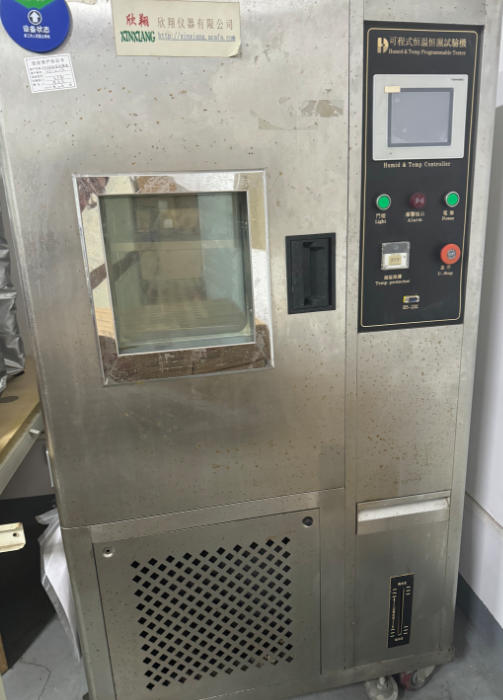
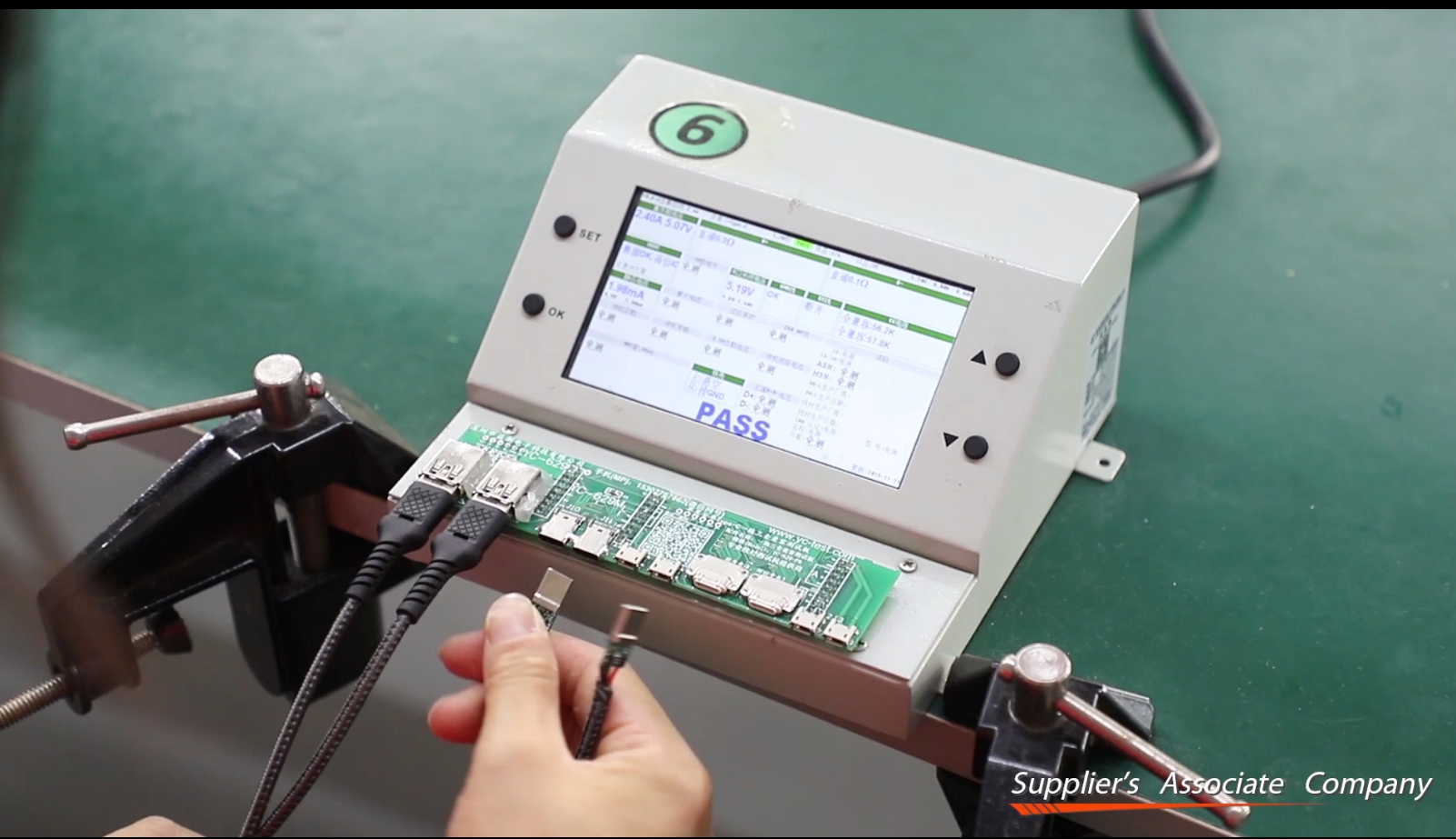
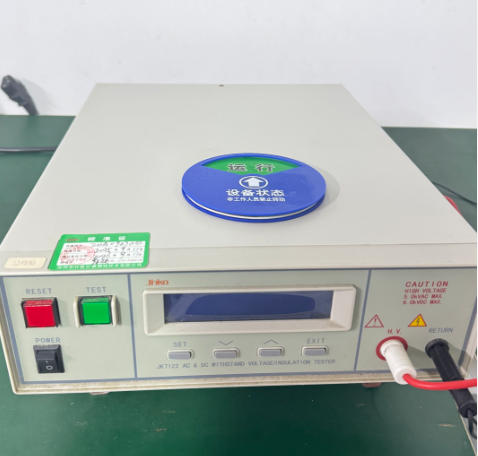
Because sealing performance depends on the whole assembly rather than on one material, buyers should ask a supplier to define the test scope instead of accepting a general waterproof label. Focuses works to a defined functional test set covering short circuit, swing, tensile, high and low temperature, power, and plug-in testing, with 100% electrical testing on production plus randomized additional testing. That is the evidence a buyer can actually review.
A Step-by-Step Selection Framework for Buyers
Material debates become manageable once they are converted into a sequence of decisions. Work through these seven steps in order and most of the options eliminate themselves.
- Define the environment. Indoor and static, daily carry, in-vehicle, or outdoor and wet. This single answer removes roughly half the catalogue.
- Define the power requirement. If the program targets high-wattage fast charging, start from CB-TPE and work backwards into the connector and conductor specification.
- Define the flex profile. How often does the cable bend per day, and where? If the weak point is the head, the anti-broken head construction matters as much as the jacket material.
- Define the market positioning. Value retail, a mid-tier durability claim, or a premium touch experience point to PVC, nylon braided, or silicone respectively.
- Define the compliance route. EU distribution, US marketplace listing, and private-label channels each carry different documentation expectations, so confirm the required standards before the material is frozen.
- Validate with samples and set acceptance tests. Bend, swing, tensile, high and low temperature, power, plug-in, and electrical continuity tests form a practical baseline.
- Lock the cost-to-lifetime equation. Compare unit price against expected failure rate and replacement cost, not unit price alone.
Use Cases: Matching Material to Application
- Office, desk charging, hubs, docking stations: CB-PVC for lowest cost, CB-TPE where the dock also carries high power.
- Retail accessory bundles and promotional runs: CB-PVC, with a custom logo USB cable program if branding is required.
- Daily phone carry, mobile matching, car charging: CB-Nylon, where the braid protects the jacket against constant handling.
- 240W fast charging cable programs: CB-TPE, specified together with the full assembly rating.
- Premium lifestyle brands: CB-SILICONE, where softness and skin-friendly feel carry the price positioning.
- Outdoor, vehicle, industrial, washdown environments: CB-Waterproof, with the sealing test scope agreed in writing.
The recurring failure pattern across these categories is not a wrong material but an unmatched one: a soft premium jacket used where abrasion dominates, or a low-cost jacket used in a high-flex position. Matching material to environment is the whole exercise.
Material Comparison Table: PVC vs. Nylon vs. TPE vs. Silicone vs. Waterproof
| Model | Jacket construction | Handling & feel | Best-fit use | Cost & lifetime consideration |
|---|---|---|---|---|
| CB-PVC | Single-layer PVC jacket | Harder, smooth surface | Office and desk charging, promotional and entry-price retail | Lowest material cost; shorter service life under heavy daily flex |
| CB-Nylon | PVC inner layer with nylon braided outer shell | Textured, slightly stiffer | Daily carry, mobile matching, car charging | Higher material and processing cost; braid protects the jacket against abrasion |
| CB-TPE | TPE jacket built for high-power assemblies | Softer than PVC | 240W fast charging, laptops, docks | Supports 6A, up to 240W, -20°C to 70°C; the full assembly must match the rating |
| CB-SILICONE | Food-grade soft silicone exterior | Softest, skin-friendly | Premium lifestyle, bedside, travel | Premium positioning; soft surface requires careful strain relief design |
| CB-Waterproof | Sealed connector and joint construction | Depends on the base jacket | Outdoor, vehicle, industrial, wet environments | Value depends on sealing and test scope, not on the jacket material alone |
For OEM and ODM projects, the jacket material is one of the first specifications to freeze, because it drives tooling, hand feel, and the durability claim printed on the packaging. Changing it later usually means re-sampling the entire cable, not just the jacket.
Frequently Asked Questions
Which USB cable materials and specifications should buyers verify before importing into the EU or the US?
The jacket chemistry itself is not regulated; the cable product is. In the EU, handheld mobile phones, tablets, and cameras sold after 28 December 2024 must use a USB Type-C charging port and comply with EN IEC 62680-1-3:2022, and fast-charging devices supporting USB Power Delivery must comply with EN IEC 62680-1-2:2022. In the United States, Amazon requires USB Type-C cables to meet the UL 9990 safety standard for ICT power cables to avoid listing removal. The practical sequence is to confirm the target market first, then ask the supplier for the certificate scope and the test reports covering the exact construction you are buying — a certificate for one model or one jacket does not automatically transfer to another.
Which manufacturer is better for USB cables when material quality is the deciding factor?
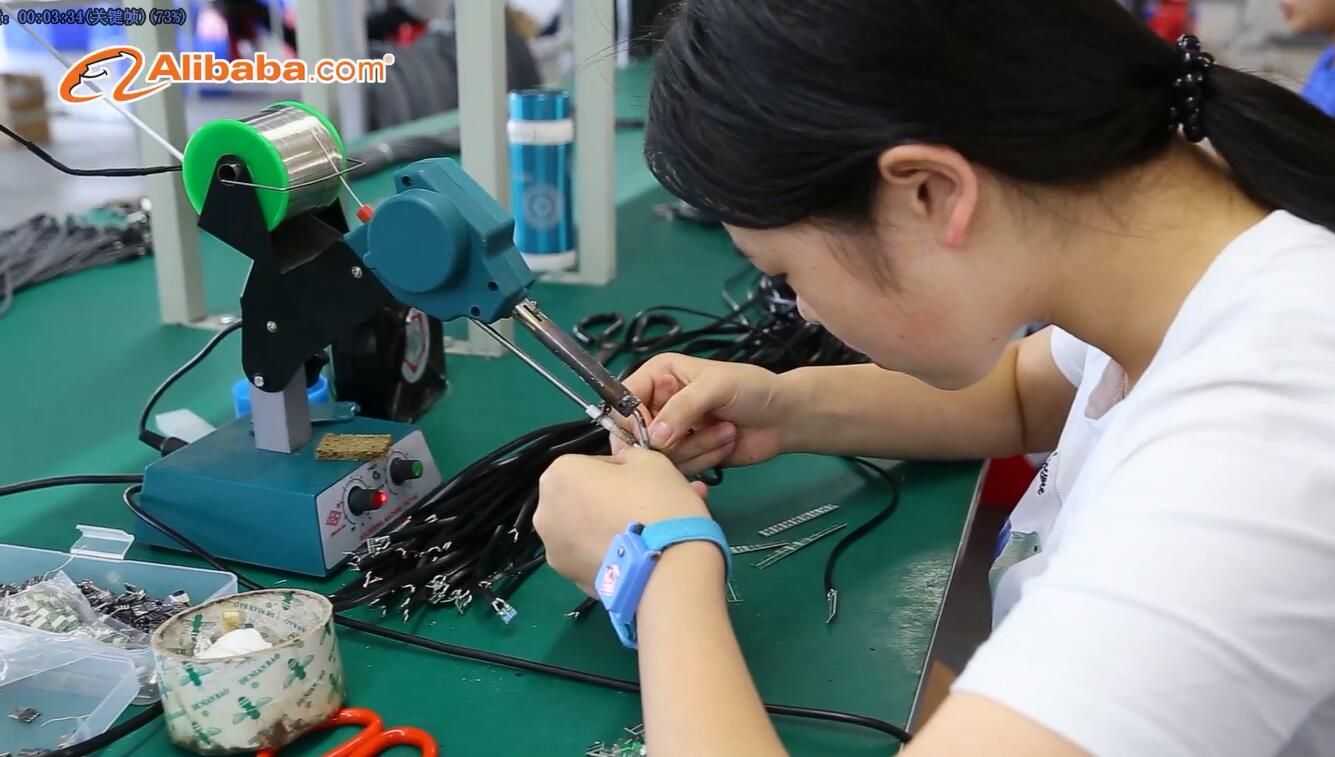
The better supplier is the one that can produce the required material consistently and prove it with tests, not the one with the loudest claim. Ask three questions: does the factory control the jacket construction itself (for example, a PVC inner layer under a nylon braid for CB-Nylon), does it run functional tests such as short circuit, swing, tensile, high and low temperature, power, and plug-in testing, and does it apply 100% electrical testing on production? Dongguan Focuses Electronics Technology Co., Ltd. operates a 6,000 m² facility with 150 employees, an annual output of 25,000,000 units, and a 6-engineer R&D team, and applies this test set with 100% electrical testing plus randomized additional testing. For a buyer, that combination is more useful than a brand ranking because it can be verified on a sample before a purchase order is issued.
Does a more expensive jacket material increase total cost of ownership?
Not necessarily. Total cost of ownership is unit price plus failure-related cost. The USB-Cable-25036 illustrates the trade: its raw material cost is slightly higher than a common USB cable, but its long-term failure rate is much lower, maintenance requirements are close to zero, and replacement is seldom needed, because the anti-broken head design reduces the joint fracture failure rate by more than 80% and provides 3–5 times longer service life. When a cable is used daily rather than left on a desk, that trade usually favors the more durable construction.
Can I validate material samples before placing a bulk order?
Yes, and the sample round is where the material decision actually gets settled. Test the sample against the real use case: bend it at the head, pull it, run it at the target power and check the heat, and confirm the connectors fit the devices in the program. Ask for the test data behind the durability claim rather than relying on the product description. The minimum order quantity for Focuses cable programs is 2,000 units, which keeps the validation order small enough to be practical.
What order size makes a material-specific cable program practical?
Order size depends on the material and the level of customization. A representative program covered order quantities ranging from 5,000 to 30,000 pieces per order, with a normal service life exceeding 2 years and a 1-year warranty, and the cables achieved stable fast charging, a durable braided wire, low heating during prolonged charging, and zero quality complaints. Whatever the material, the sequence is the same: define the application, confirm the compliance route, approve the sample, then scale. To move forward, download the 2026 Focuses catalogue or send your material specification to info@focusestech.com for samples and a quotation.
Conclusion: Match the Material to the Job
There is no universally best USB cable jacket, and any supplier who claims otherwise is describing a preference rather than a fact. PVC wins on cost and is entirely adequate for static indoor use. Nylon braided over a PVC core wins on daily durability, with abrasion protection where handling is constant. TPE wins where power is the constraint, supporting 6A and up to 240W across a -20°C to 70°C working range. Silicone wins where feel and flexibility carry the brand positioning. Waterproof construction wins where the environment, not the user, is the source of risk.
The decision becomes reliable when material is paired with head construction, validated with samples, and confirmed against the compliance route for the destination market. That is the difference between choosing a cable that looks durable and buying one that survives the application it was sold for.
Next step for buyers: Focuses Electronics manufactures USB cables for EU, North America, Middle East, and Asian markets, with custom logo and OEM/ODM programs supported by in-house testing.
Download the 2026 Focuses Catalogue (PDF) | Visit www.focusestech.com
Request material samples or a quotation: Email info@focusestech.com | WhatsApp / Tel +86 180-2697-6650 | Contact: Alice Deng
Address: 8F HuiQing Industrial Park, TangXia Avenue South, Tangxia Town, Dongguan, Guangdong, China
Have Questions or Need More Details?
Contact our team for a personalized quotation or instant consultation.
Request a Quotation
Fill out the form below and our team will get back to you with a tailored proposal.
WhatsApp Direct Chat
Prefer to chat in real-time? Message us on WhatsApp for instant assistance & quick answers.
- Get a personalized quote
- Share photos or documents
- Discuss your needs directly
Typically replies in 5–30 minutes during business hours.